
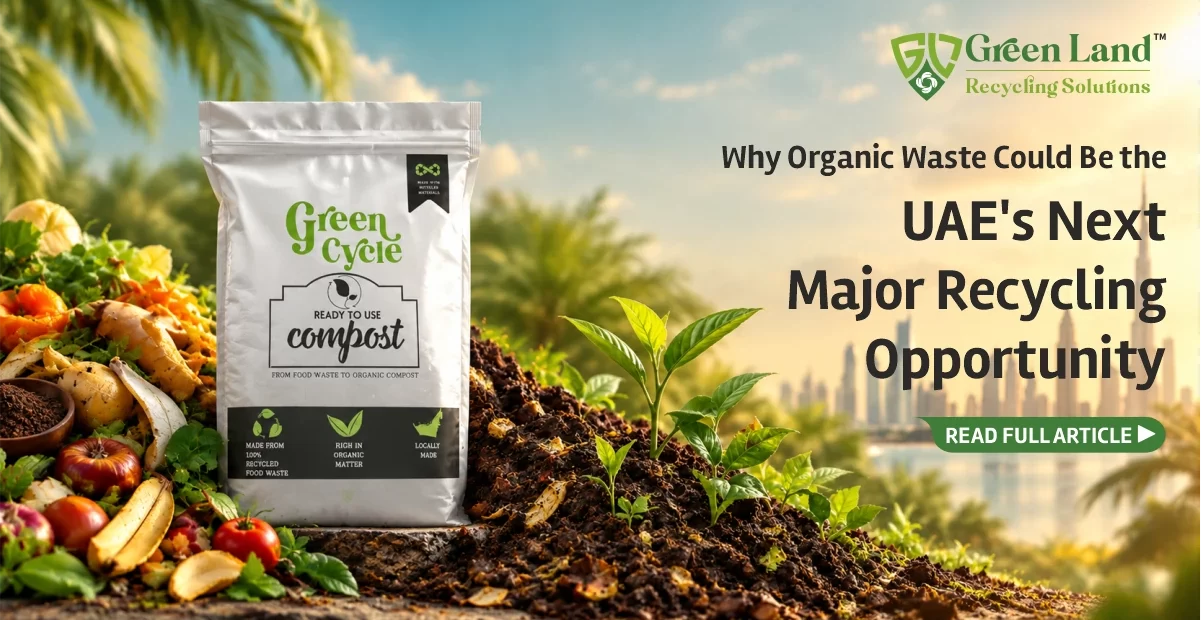
When people think about recycling, materials such as plastic, paper, glass, metal, and electronic waste usually come to mind. Yet one of the most significant opportunities may be hiding in a much more common waste stream: organic waste.
Across the UAE, businesses in hospitality, food service, retail, catering, and food processing generate substantial quantities of food scraps, vegetable waste, expired produce, and other biodegradable materials every day. When mixed with general waste, these materials are often treated simply as something to be removed. But with proper segregation and timely processing, organic waste can become a valuable resource.
This is where organic waste recycling in the UAE has the potential to play a much larger role in the country’s transition towards a circular economy.
Organic waste is different from other recyclable materials because time matters. Food and biodegradable waste can quickly decompose, creating odour, contamination, and storage challenges. Businesses therefore need efficient segregation, collection, and processing systems that prevent organic materials from being mixed with plastics, packaging, or other general waste.
Once properly separated, organic waste can be processed into useful outputs such as compost and soil-enhancing materials. This creates an opportunity to recover value from a waste stream that is generated consistently and in significant volumes.
At Green Land Recycling Solutions, organic waste management is part of a wider approach to commercial resource recovery. Businesses can benefit from structured collection and recycling solutions that help manage food and biodegradable waste more efficiently. Through responsible processing, organic waste can be diverted from general disposal and directed towards more productive uses, including the creation of Green Cycle, Greenland’s 100% organic compost designed for commercial applications.
For hotels, restaurants, supermarkets, catering businesses, food manufacturers, and other organisations, better organic waste management can also improve daily operations. Dedicated collection systems can reduce contamination, improve hygiene, free up storage space, and provide greater visibility into how much food-related waste a business generates.
The opportunity extends beyond individual businesses. As the UAE continues to strengthen its sustainability and circular economy ambitions, organic waste represents a material stream that deserves greater attention.
The future of recycling may not only be found in what we manufacture. It may also be found in what we eat, prepare, sell, and eventually discard.
With the right segregation, collection, and recovery systems, yesterday’s food waste could become tomorrow’s resource. And that makes organic waste one of the UAE’s most promising recycling opportunities.