Uniform replacement is a routine part of business operations. Hotels refresh staff attire, healthcare facilities replace worn garments, security companies update uniforms, and organisations introduce new branding or revised dress codes.
What often receives far less attention is what happens to the uniforms being replaced.
A large uniform change can generate a significant volume of textile waste in a very short period. Shirts, trousers, jackets, work wear, protective clothing, and branded garments may no longer be suitable for continued use, even when much of the underlying material remains intact.
This makes Textile Recycling in UAE an increasingly relevant consideration for businesses looking to manage commercial waste more responsibly.
The challenge is not limited to visibly worn-out uniforms. A company may replace perfectly functional garments because of a rebrand, design update, staff changes, or revised operational requirements. When hundreds or thousands of garments are replaced at once, storing, disposing of, or managing the old inventory can quickly become an operational issue.
Sending these textiles into the general waste stream means potentially recoverable materials are mixed with other waste. Depending on the type and composition of the fabric, textiles may contain fibres and materials that can be directed towards appropriate recovery or recycling processes.
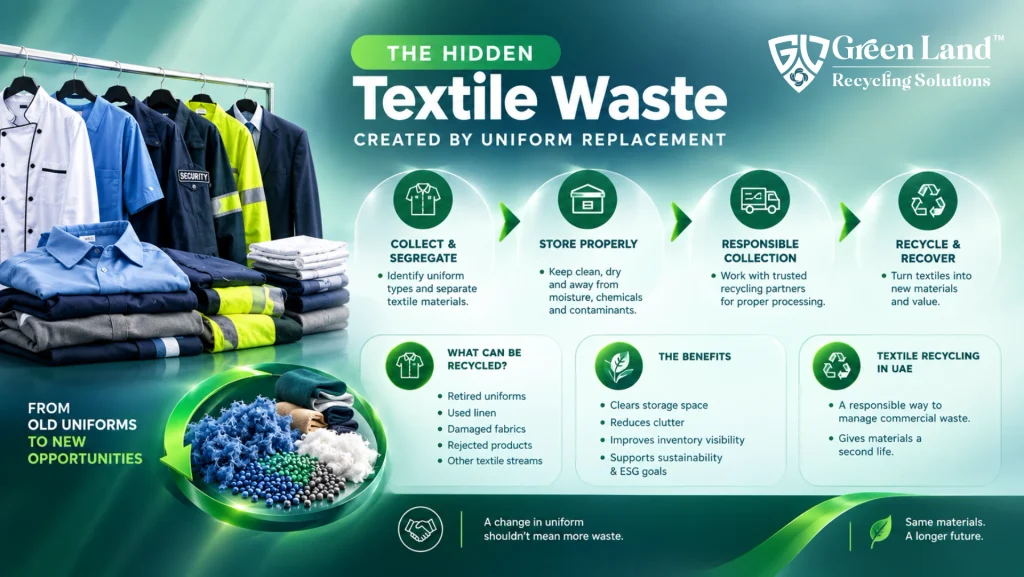
The first step is to understand what is being discarded. Businesses should identify the types of uniforms involved, separate textile materials where possible, and ensure they are stored in a clean, dry, dedicated area before collection. Keeping textiles away from moisture, food waste, chemicals, and other contaminants can help preserve their recovery potential.
At Green Land Recycling Solutions, businesses can access structured support for managing commercial textile waste, including retired uniforms, used linen, damaged fabrics, rejected textile products, and other specialised material streams. Through proper collection, segregation, and responsible processing, businesses can take a more organised approach to materials that have reached the end of their intended use.
A planned uniform replacement programme can also create operational benefits. It helps clear storage areas, reduces clutter, improves visibility over obsolete inventory, and supports wider sustainability and ESG objectives.
The next time a business introduces a new uniform, it is worth considering the old one as part of the transition plan.
A uniform may no longer represent the organisation it once did. But its material can still have a journey beyond the workplace.
With responsible Textile Recycling in UAE, businesses can ensure that a change in appearance does not automatically become an increase in waste.