Fabric does not have to be completely worn out before it becomes commercial waste.
Hotels replace linen. Hospitals and healthcare facilities retire textiles. Uniforms become outdated. Retailers deal with damaged stock. Manufacturing and industrial operations generate fabric offcuts, rejected materials, and surplus inventory. Across businesses, large quantities of textiles can reach the end of their intended use long before the material itself has lost all potential value.
This is where Textile and Fabric Recycling in UAE becomes an important part of responsible commercial waste management.
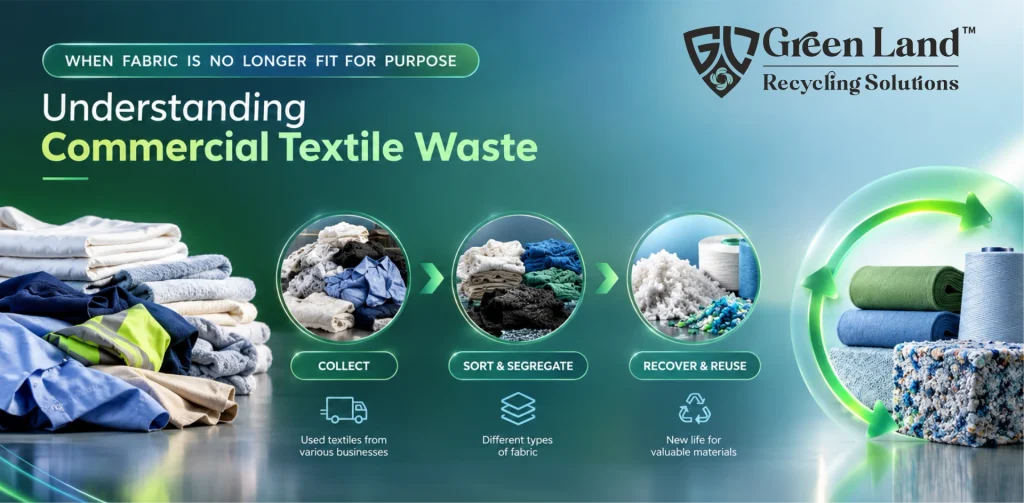
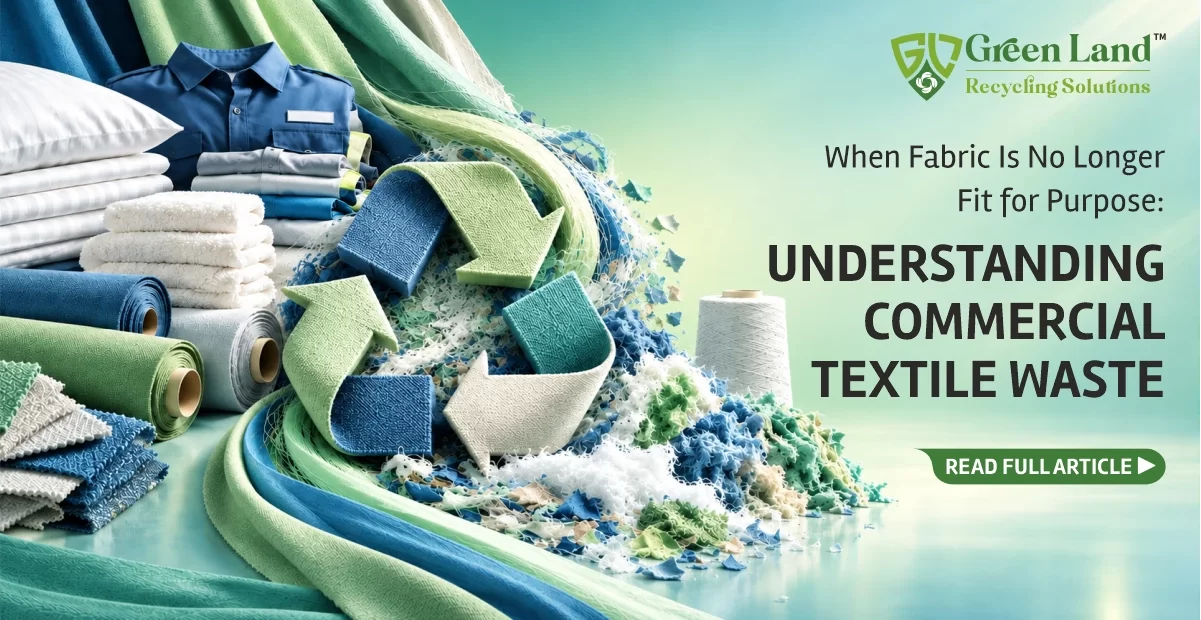
Commercial textile waste can include used uniforms, bed linen, towels, curtains, upholstery, fabric samples, manufacturing offcuts, damaged garments, rejected stock, and other textile-based materials. While some of these items may no longer be suitable for reuse, that does not automatically mean they belong in the general waste stream.
The first step is to understand the material. Textiles can be made from natural fibres, synthetic fibres, or blended materials, and each may require a different approach to recycling or recovery. Proper segregation also helps prevent recyclable textiles from becoming contaminated by food waste, moisture, chemicals, or other materials that can reduce their recovery potential.
For businesses, managing textile waste effectively begins before collection. Establishing dedicated storage areas, separating different types of fabric, and regularly reviewing volumes can help create a more organised and efficient recycling process.
At Green Land Recycling Solutions, businesses across the UAE can access structured solutions for managing commercial textile and fabric waste. From used linen and damaged towels to uniforms, rejected textile products, fabric offcuts, and other specialised waste streams, the focus is on responsible collection, segregation, and resource recovery wherever possible.
A structured approach to Textile and Fabric Recycling in UAE can also deliver operational benefits. Removing unwanted textiles frees valuable storage space, reduces workplace clutter, improves waste visibility, and supports wider sustainability and ESG objectives.
The opportunity lies in changing how businesses view used fabric. A stained towel, torn sheet, obsolete uniform, or damaged textile product may no longer serve its original purpose, but the material can still have a potential pathway beyond disposal.
As businesses across the UAE look for smarter ways to manage resources, textile recycling deserves more attention. Understanding what is being discarded, how it is stored, and what recovery options are available is the first step towards keeping valuable materials in circulation for longer.
When fabric is no longer fit for its original purpose, its journey does not necessarily have to end there.