When businesses think about waste, they usually focus on what is visible—overflowing bins, packaging materials, or production waste. Yet some of the most costly and overlooked waste streams are hidden in plain sight.
Across offices, warehouses, retail outlets, hospitality facilities, and industrial operations, waste often accumulates quietly in storage rooms, back offices, and operational areas. These hidden waste streams can affect efficiency, increase disposal costs, and undermine sustainability goals.
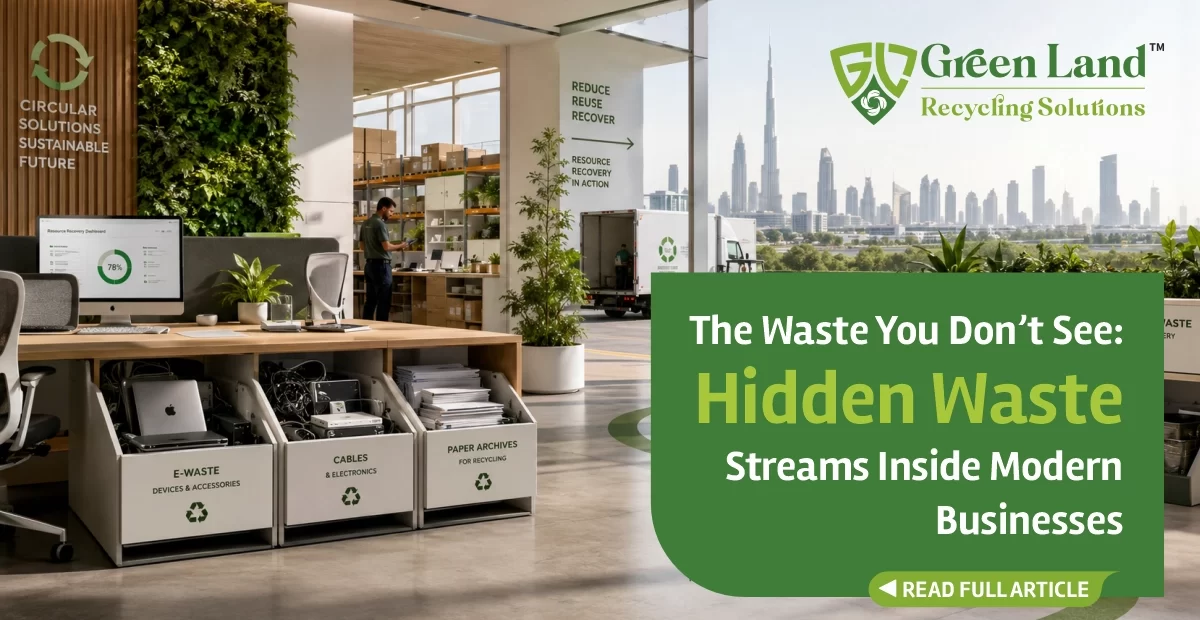
Take a closer look at a typical business environment. Obsolete IT equipment sits unused after technology upgrades. Expired stock occupies valuable warehouse space. Damaged packaging materials accumulate over time. Food waste generated in cafeterias is mixed with general waste. Old documents, promotional materials, and unused inventory often remain forgotten until they become a disposal problem.
The challenge is not just the volume of waste. It is the lost opportunity for resource recovery and recycling.
Many hidden waste streams contain valuable recyclable materials. Electronic devices can be processed through responsible e-waste recycling and secure data destruction programs. Expired products and bulk inventory can often be sorted, segregated, and directed into appropriate recycling channels. Organic waste can be recovered through structured organic waste management systems rather than being sent to landfill.
This is where effective waste segregation becomes critical. Once recyclable materials are mixed with general waste, their recovery potential drops significantly. Clean segregation allows businesses to maximise recycling rates, improve sustainability performance, and reduce waste management costs.
At Green Land Recycling Solutions, businesses across the UAE are supported with integrated recycling services that address these often-overlooked waste streams. From e-waste recycling and secure data destruction to organic waste management, bulk waste recycling, and material recovery, the goal is to help organisations gain visibility into what they discard and unlock value from it.
As ESG expectations continue to grow, businesses are increasingly being evaluated not only on the waste they manage, but also on the waste they overlook. Hidden waste streams can impact sustainability reporting, operational efficiency, and environmental performance more than many organisations realise.
The most effective waste management strategies are not built around what is obvious. They are built around identifying what has been ignored.
Because the waste you don’t see today could be the biggest opportunity to improve your recycling performance, strengthen your ESG outcomes, and move closer to a truly circular economy.