
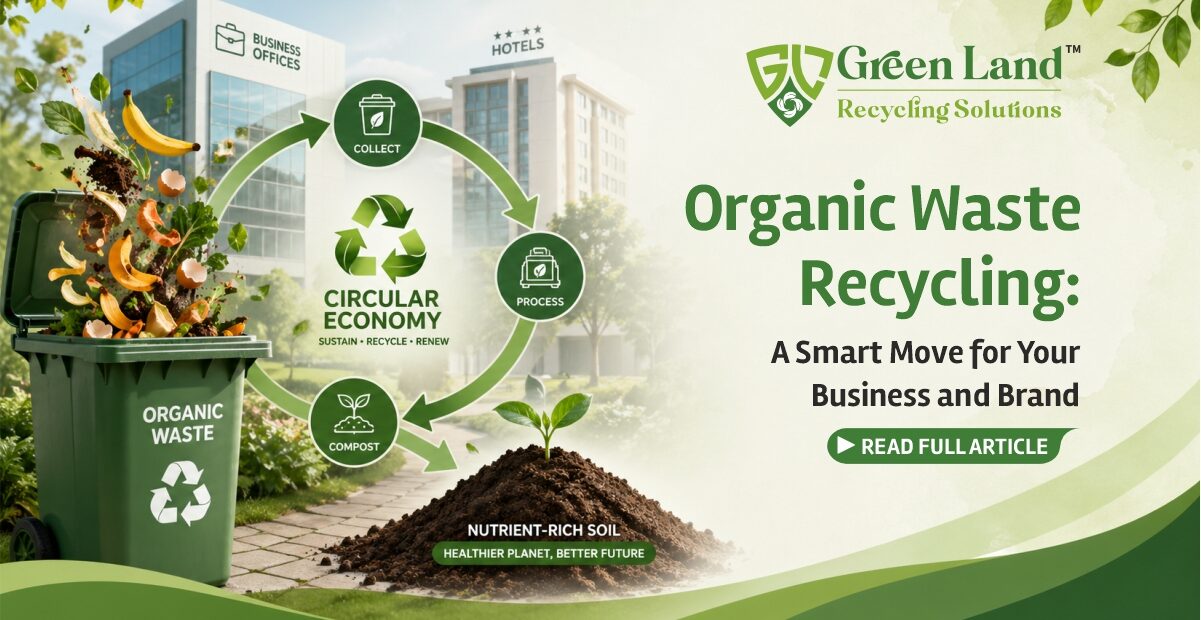
Organic waste is often seen as unavoidable — food scraps from cafeterias, expired stock, pantry waste, and kitchen leftovers are part of daily operations in offices, hotels, warehouses, and retail spaces.
But what many businesses overlook is this: organic waste is not just waste — it’s an opportunity.
When managed correctly, organic waste can be transformed into valuable resources like compost, while also strengthening a company’s sustainability profile and reducing operational costs.
The Hidden Impact of Organic Waste
Organic waste is one of the largest contributors to landfill volumes. When it is mixed with general waste and sent to landfill, it decomposes without oxygen and produces methane, a greenhouse gas far more potent than carbon dioxide.
In the UAE’s hot climate, this process accelerates, increasing environmental impact. Beyond emissions, organic waste also contaminates other recyclable materials, making them harder to process.
What could have been recycled becomes lost — along with the value it holds.
Why Organic Waste Recycling Makes Business Sense
1. Reduces Disposal Costs
Organic waste often makes up a significant portion of business waste. Separating and recycling it reduces the volume sent to landfill, lowering disposal and handling costs.
2. Improves Waste Efficiency
Segregating organic waste helps keep dry recyclables clean, improving overall recycling efficiency across all waste streams.
3. Supports ESG and Sustainability Goals
Recycling organic waste contributes to measurable environmental impact, helping businesses strengthen ESG reporting and sustainability commitments.
4. Enhances Brand Reputation
Today’s customers and stakeholders value responsible businesses. Demonstrating commitment to waste reduction and sustainability builds trust and strengthens brand image.
From Waste to Resource: The Recycling Process
Organic waste recycling is a controlled and structured process.
1. Segregation at Source
Food waste is separated from plastics, packaging, and other materials.
2. Collection and Transport
Waste is collected under hygienic conditions to prevent contamination.
3. Composting Process
Organic material is processed into nutrient-rich compost through controlled decomposition.
4. Reuse and Application
The compost is used for landscaping, agriculture, and soil improvement — returning value back to the environment.
This process transforms organic waste into a circular resource rather than a landfill burden.
Which Businesses Benefit the Most?
Organic waste recycling is especially valuable for:
- Offices with cafeterias and pantry areas
- Hotels, restaurants, and catering services
- Retail businesses handling food products
- Warehouses with expired stock
- Industrial facilities with food-related operations
For these sectors, organic waste is not a minor stream — it is a major opportunity.
How Green Land Recycling Solutions Supports Your Business
At Green Land Recycling Solutions, we help UAE businesses implement structured organic waste recycling systems.
Our services include:
- Waste audits and segregation planning
- Collection and transportation
- Composting and resource recovery
- Compliance-ready documentation and reporting
We ensure organic waste is handled responsibly, efficiently, and in line with sustainability goals.
The Business Advantage of Acting Now
Organic waste recycling is no longer just an environmental initiative — it is a business advantage.
Companies that act early benefit from:
- Lower costs
- Better operational control
- Stronger ESG performance
- Enhanced brand credibility
Those that delay risk higher costs, stricter regulations, and missed opportunities.
The Bottom Line
Organic waste does not belong in landfills.
It belongs in a system that turns it into value.
By embracing organic waste recycling, businesses can reduce their environmental impact while strengthening their brand and improving efficiency.
With Green Land Recycling Solutions, your waste becomes a resource — and your sustainability efforts become measurable impact.