
In today’s digital-first business environment, data is one of the most valuable assets an organization owns. From financial records and employee details to customer databases and confidential communications, sensitive information lives across multiple devices.
But what happens when those devices reach the end of their lifecycle?
For many businesses, old laptops, servers, hard drives, and storage devices are simply discarded or stored away — often without proper data destruction. This oversight can expose companies to serious security risks, compliance issues, and reputational damage.
Secure e-waste disposal is not just about recycling hardware. It is about protecting your data.
The Hidden Risk Inside Discarded Devices
Every electronic device holds data — even after deletion.
Hard drives, SSDs, USB devices, and servers often retain recoverable information unless they are properly destroyed. Simply formatting or deleting files does not permanently erase data.
Improper disposal can lead to:
- Data breaches
- Unauthorized access to confidential information
- Identity theft risks
- Legal and financial consequences
What appears to be “waste” can still contain valuable and sensitive data.
Why Data Destruction Is Critical
1. Protecting Business Confidentiality
Organizations handle sensitive contracts, internal strategies, and financial information. If this data falls into the wrong hands, it can impact competitiveness and trust.
2. Safeguarding Customer and Employee Information
Personal data stored in devices must be handled responsibly. Improper disposal can lead to privacy violations and loss of stakeholder confidence.
3. Ensuring Compliance
Businesses are increasingly expected to follow strict data protection and disposal standards. Secure data destruction supports compliance and audit readiness.
4. Preventing Reputational Damage
A single data breach can damage years of brand credibility. Responsible e-waste handling helps protect business reputation.
Common Mistakes Businesses Make
Many organizations unknowingly compromise data security through:
- Storing old devices without proper tracking
- Disposing of electronics with general waste
- Relying on basic data deletion instead of destruction
- Using uncertified disposal services
These practices create vulnerabilities that can be avoided with the right approach.
Best Practices for Secure E-Waste Disposal
1. Identify and Segregate E-Waste
Keep electronic waste separate from general waste and track devices ready for disposal.
2. Use Certified Data Destruction Methods
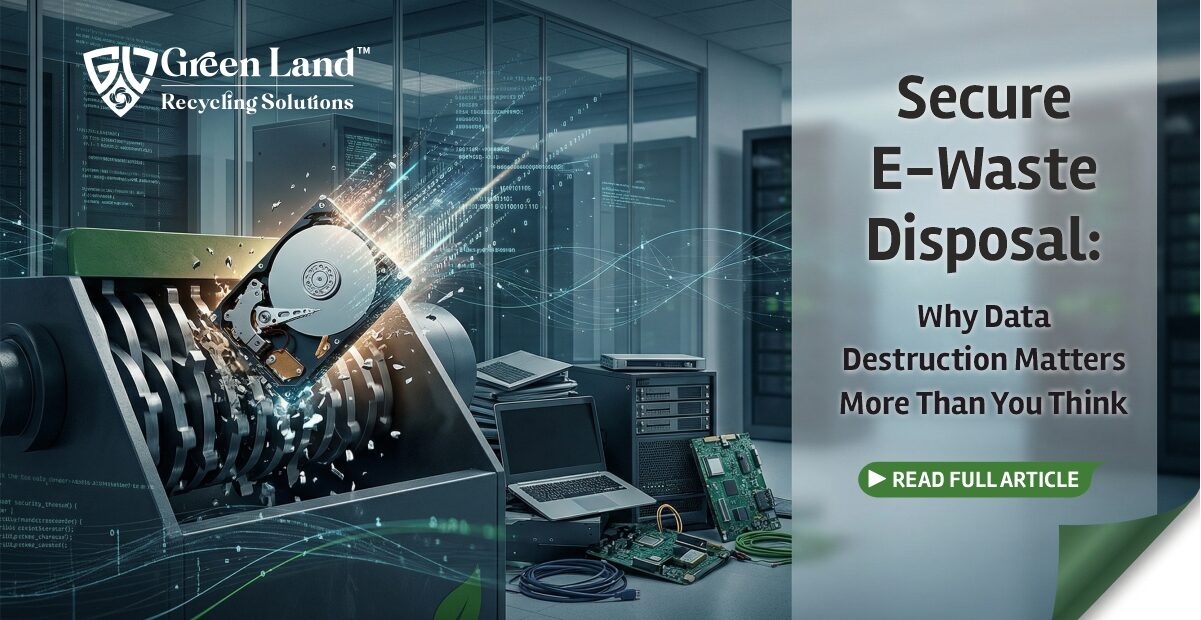
Methods such as hard drive shredding and degaussing ensure data is permanently destroyed.
3. Maintain Documentation
Certificates of destruction and disposal records are essential for compliance and audits.
4. Partner with Certified Recycling Providers
Professional recyclers ensure both secure data destruction and environmentally responsible recycling.
How Green Land Recycling Solutions Ensures Security
At Green Land Recycling Solutions, we provide secure and compliant e-waste management services for businesses across the UAE.
Our approach includes:
- Secure data destruction processes
- Safe handling of electronic devices
- Certified recycling and disposal
- Full documentation for compliance and reporting
We ensure that your devices are not just recycled — they are securely handled from data to disposal.
The Bottom Line
E-waste is not just an environmental concern — it is a data security risk.
Ignoring proper data destruction can lead to financial loss, legal consequences, and reputational damage. Addressing it proactively protects your business, your customers, and your future.With Green Land Recycling Solutions, secure e-waste disposal becomes a controlled, reliable, and compliant process.