For businesses, products don’t always reach the end of their commercial life through successful sales. Some expire, some get damaged during storage or transportation, others are rejected due to quality issues, packaging defects or changing market requirements. And sometimes, products simply stop selling.
The challenge begins when businesses have no clear plan for managing these items.
Without an organised end-of-life process, expired, damaged or unsellable stock can accumulate in warehouses, occupy valuable storage space and create unnecessary operational complications.
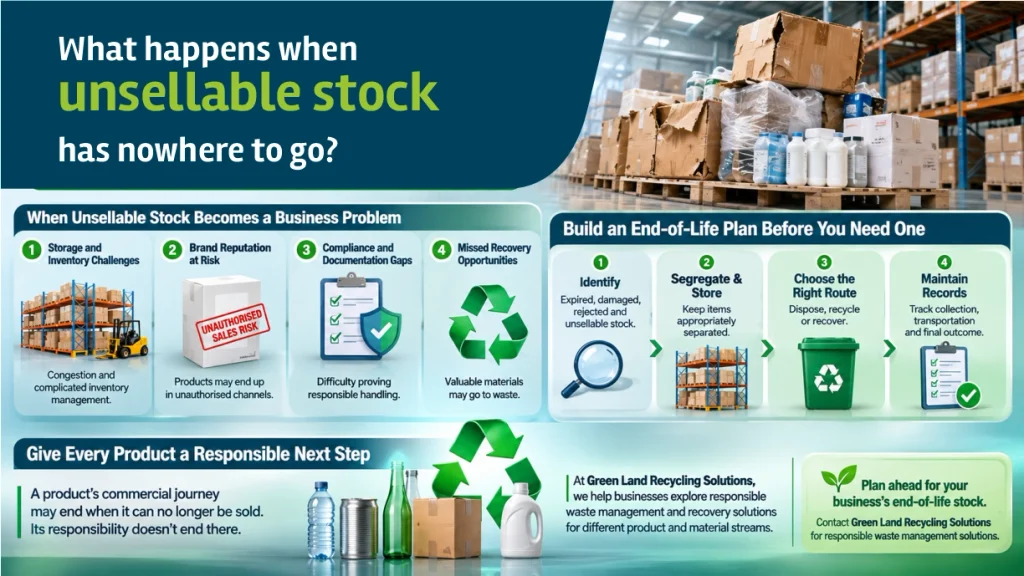
When Unsellable Stock Becomes a Business Problem
1. Storage and inventory challenges
Products that cannot be sold often remain in storage while businesses decide what to do with them. Over time, this can create congestion, complicate inventory management and make it harder to distinguish usable stock from items awaiting disposal or recovery.
2. Brand reputation at risk
Products carrying a company’s branding, labels or packaging should not simply be discarded without considering where they might end up. Uncontrolled disposal can create the risk of products re-entering unauthorised sales channels, being misused or affecting brand perception. A clear handling process helps businesses maintain better control over their unsellable stock.
3. Compliance and documentation gaps
Different product categories may have specific requirements for storage, handling, transportation and disposal. Without a defined process, businesses may struggle to establish whether materials were handled appropriately or maintain the records needed to demonstrate responsible management.
4. Missed recovery opportunities
Not every unsellable product needs to become mixed waste. Depending on its composition, condition and applicable handling requirements, certain products or their packaging may be suitable for recycling or material recovery. Without an assessment process, these opportunities can easily be overlooked.
Build an End-of-Life Plan Before You Need One
An effective end-of-life plan starts with identifying what happens when products can no longer be sold or used.
Businesses should establish clear procedures for identifying expired, damaged, rejected and unsellable stock. These items should be appropriately segregated, securely stored where necessary and assessed according to their material composition and handling requirements.
The next step is to determine the appropriate route for each category. This may involve authorised disposal, recycling, material recovery or other suitable management processes.
Maintaining relevant records of collection, transportation, treatment and final disposal or recovery also helps businesses maintain visibility and accountability throughout the process.
Give Every Product a Responsible Next Step
A product’s commercial journey may end when it can no longer be sold. Its responsibility doesn’t end there.
At Green Land Recycling Solutions, we help businesses explore responsible waste management and recovery solutions for different product and material streams, supporting a more organised approach to end-of-life stock.
Planning ahead helps businesses protect their operations, maintain better control over unsellable inventory and identify opportunities for responsible material recovery.
Plan ahead for your business’s end-of-life stock. Contact Green Land Recycling Solutions for responsible waste management solutions.