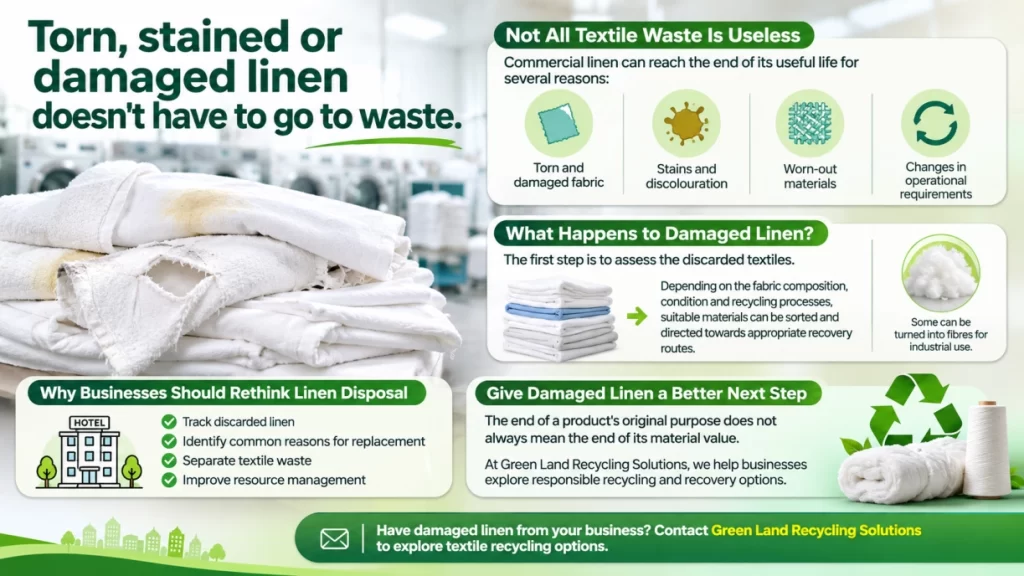
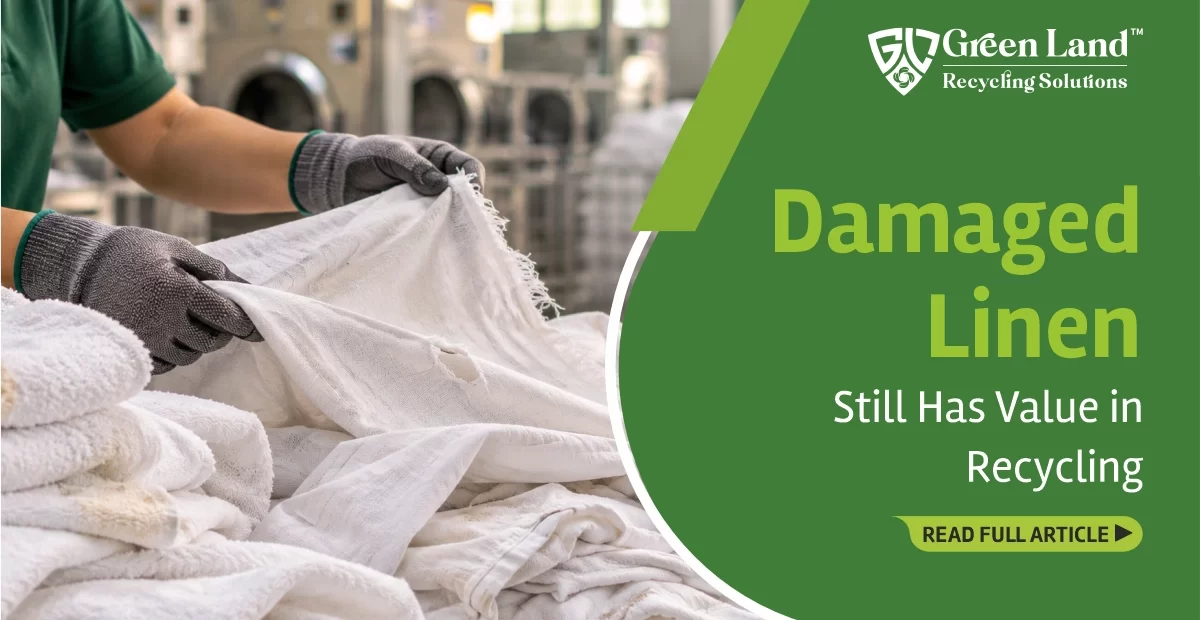
Torn, stained or damaged linen doesn’t have to go to waste.
For hotels, hospitals, resorts, laundries and other businesses, linen is an essential part of daily operations. Sheets, towels, pillowcases and other textile products are used repeatedly, washed frequently and eventually replaced when they no longer meet operational or quality standards.
But what happens to them after they are taken out of service?
Too often, damaged linen is treated as waste without considering whether its material can still be recovered. A torn bedsheet or stained towel may no longer be suitable for its original purpose, but that doesn’t necessarily mean it has no further value.
Not All Textile Waste Is Useless
Commercial linen can reach the end of its useful life for several reasons.
- Torn and damaged fabric: Regular use and repeated washing can weaken fibres, create holes and cause tears, making linen unsuitable for continued use.
- Stains and discolouration: Persistent stains may make sheets and towels unsuitable for guest rooms, healthcare facilities or other customer-facing applications.
- Worn-out materials: Over time, fabrics can lose their texture, strength and appearance, even when portions of the material remain intact.
- Changes in operational requirements: Businesses may replace linen as part of refurbishment, brand upgrades or changes in quality standards.
While these materials may no longer meet their original requirements, some can still be considered for textile recycling or other forms of recovery.
What Happens to Damaged Linen?
The first step is to assess the discarded textiles.
Depending on the fabric composition, condition, contamination and available recycling processes, suitable materials may be sorted and directed towards appropriate recovery routes.
Some textile materials can be processed into fibres for use in applications such as industrial wiping materials, insulation or other textile-based products. The possibilities depend on the type and quality of the material and the capabilities of the recovery process.
Not every piece of damaged linen will be suitable for recycling. However, separating reusable textiles, recyclable materials and items requiring other forms of disposal can help prevent recoverable resources from being lost in mixed waste.
Why Businesses Should Rethink Linen Disposal
Businesses that generate textile waste regularly have an opportunity to improve how these materials are managed.
Hotels, hospitals, resorts and commercial laundries can begin by tracking the quantity of linen discarded, identifying common reasons for replacement and separating textile waste from other waste streams.
Establishing a dedicated collection and assessment process can make it easier to identify suitable materials for recovery and manage the remaining waste responsibly.
This approach also helps businesses gain better visibility into their waste generation and identify opportunities to improve resource management.
Give Damaged Linen a Better Next Step
The end of a product’s original purpose does not always mean the end of its material value.
At Green Land Recycling Solutions, we help businesses explore responsible recycling and recovery options for different waste streams, including textile waste.
If your business generates torn sheets, stained towels or other damaged linen, consider what can be recovered before sending it for disposal.
Have damaged linen from your business? Contact Green Land Recycling Solutions to explore textile recycling options.