
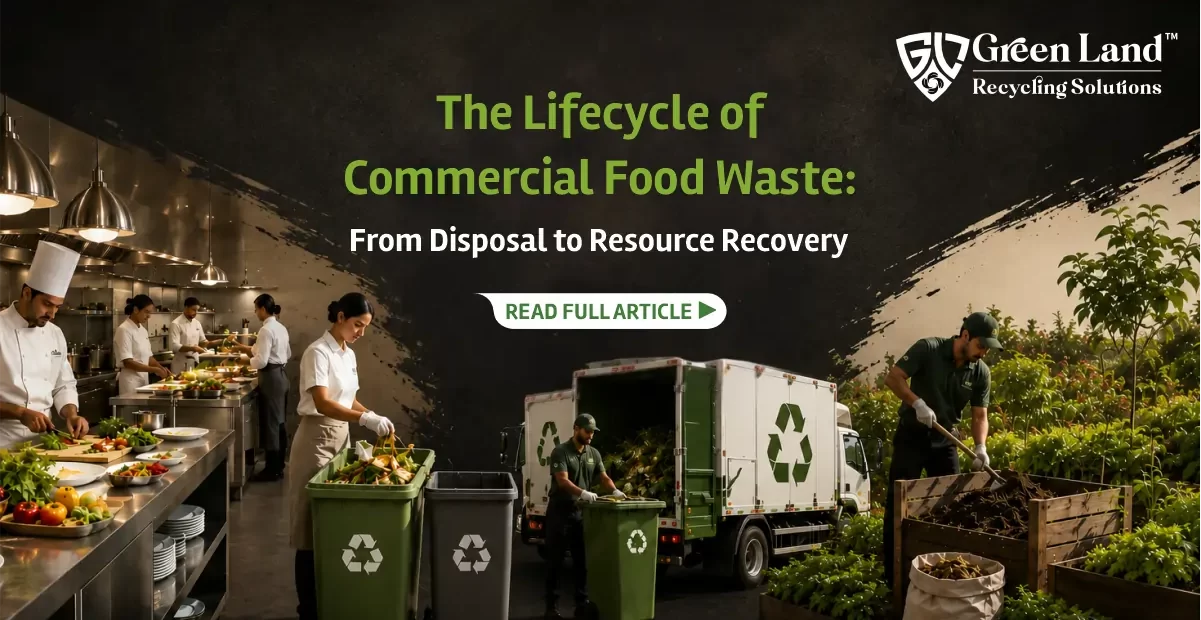
For many businesses, food waste is viewed as an unavoidable by-product of daily operations. Restaurants, hotels, catering facilities, supermarkets, and corporate cafeterias generate significant volumes of organic waste every day, often treating it as something that simply needs to be removed.
But commercial food waste has a lifecycle of its own.
When managed correctly, food waste can move through a structured recovery process that supports sustainability goals, reduces disposal costs, and contributes to a circular economy.
The journey begins at the point of generation. Food preparation, expired products, plate waste, and unsold inventory all contribute to the organic waste stream. Without proper controls, these materials are often mixed with general waste, making recovery difficult and reducing recycling opportunities.
This is where waste segregation becomes critical.
Separating organic waste at the source helps preserve its recovery potential and prevents contamination from plastics, packaging, and other non-organic materials. Businesses that implement dedicated organic waste collection systems often achieve better recycling outcomes while improving operational efficiency.
Once segregated, commercial food waste enters the next stage of the lifecycle: collection and transportation. Structured collection schedules help prevent hygiene issues, reduce odours, and ensure waste remains suitable for processing.
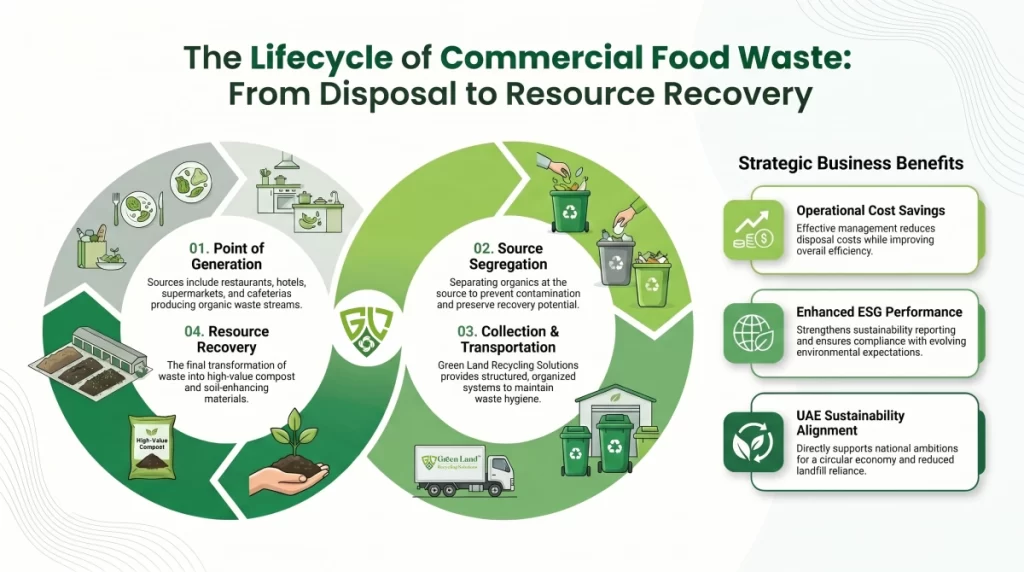
At Green Land Recycling Solutions, organic waste management is designed to support businesses through every stage of this process. Through organised collection, segregation, and recovery systems, businesses can manage food waste more efficiently while aligning with sustainability objectives.
The most important stage comes after collection: resource recovery.
Instead of being sent directly to landfill, properly managed organic waste can be processed into valuable outputs such as compost and soil-enhancing materials. This transforms food waste from an operational burden into a recoverable resource.
Beyond environmental benefits, businesses also gain operational advantages. Effective food waste management can reduce disposal costs, improve ESG performance, strengthen sustainability reporting, and support compliance with evolving environmental expectations.
As the UAE continues to advance its sustainability and circular economy ambitions, businesses are increasingly expected to look beyond disposal and focus on recovery.
Food waste should not be viewed as the end of a process. It is part of a larger resource cycle that begins in daily operations and continues through segregation, collection, recycling, and recovery.
Businesses that understand this lifecycle are not simply managing waste more effectively. They are creating opportunities to improve efficiency, recover value, and contribute to a more sustainable future.