
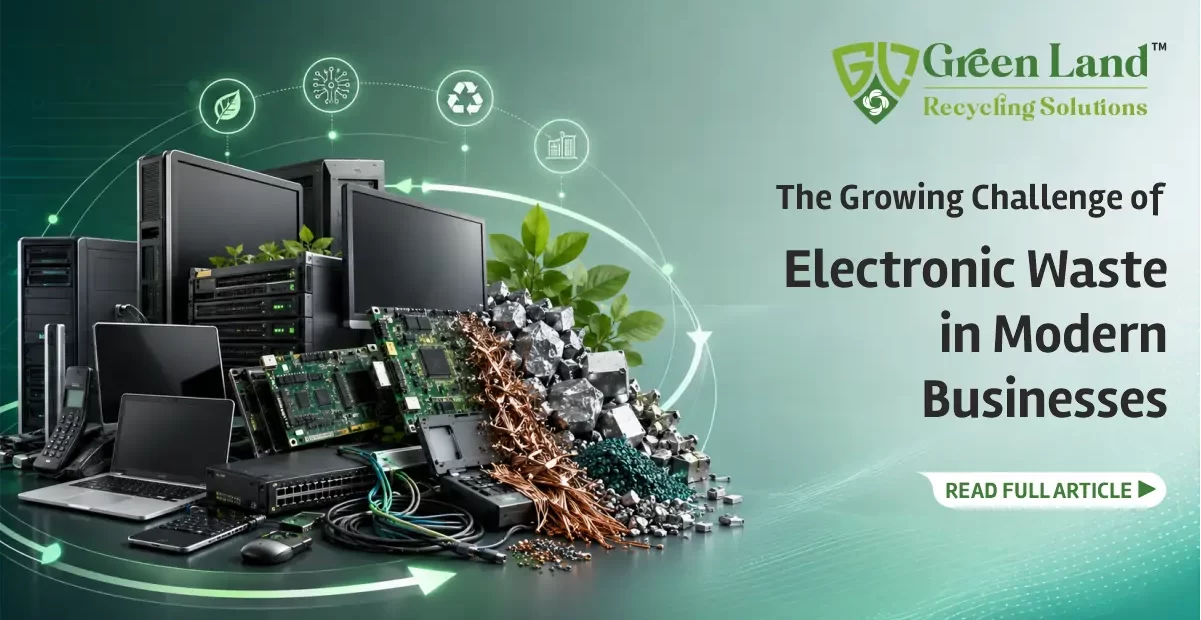
Digital transformation has made businesses more efficient than ever. But it has also created one of the fastest-growing waste streams in the world: electronic waste.
From outdated laptops and desktop computers to printers, networking equipment, servers, mobile devices, and cables, businesses routinely replace technology to keep pace with innovation. The challenge lies in what happens after these assets reach the end of their useful life.
Unlike conventional waste, electronic waste contains a complex mix of plastics, metals, glass, and electronic components. Many of these materials are valuable and recoverable, while others require careful handling to prevent environmental harm. Without responsible disposal, e-waste can contribute to resource loss, data security risks, and unnecessary landfill accumulation.
For organisations across the UAE, adopting structured e-waste recycling practices is no longer simply a sustainability initiative. It has become an essential part of responsible business operations and ESG performance.
This is why many organisations are partnering with experienced e-waste recycling companies in Dubai that offer secure collection, segregation, material recovery, and environmentally responsible processing. Working with a specialised recycling partner ensures that obsolete electronic equipment is handled safely while maximising the recovery of valuable materials such as aluminium, copper, steel, and recyclable plastics.
At Green Land Recycling Solutions, businesses receive end-to-end support for responsible electronic waste management. From office IT equipment and commercial electronics to bulk e-waste generated by warehouses, hospitality facilities, and industrial operations, the focus is on secure collection, systematic segregation, and efficient resource recovery.
Beyond environmental benefits, responsible e-waste recycling delivers tangible business value. It helps organisations optimise storage space, reduce disposal costs, support sustainability reporting, and strengthen compliance with evolving environmental expectations. When data-bearing devices are involved, secure handling also helps minimise information security risks.
As businesses continue to invest in newer technologies, electronic waste will only continue to grow. The real opportunity lies not in disposing of outdated equipment, but in recovering the valuable resources it contains.
Choosing the right recycling partner allows businesses to turn obsolete electronics into recoverable materials while supporting a more circular economy. Because the future of technology should not create more waste—it should create smarter opportunities for resource recovery.