Warehouses are high-movement environments. Every pallet received, every shipment dispatched, and every product handled creates waste in one form or another.
The challenge is not just the volume — it’s the variety. When different waste streams are mixed, costs rise, recycling efficiency drops, and compliance becomes difficult.
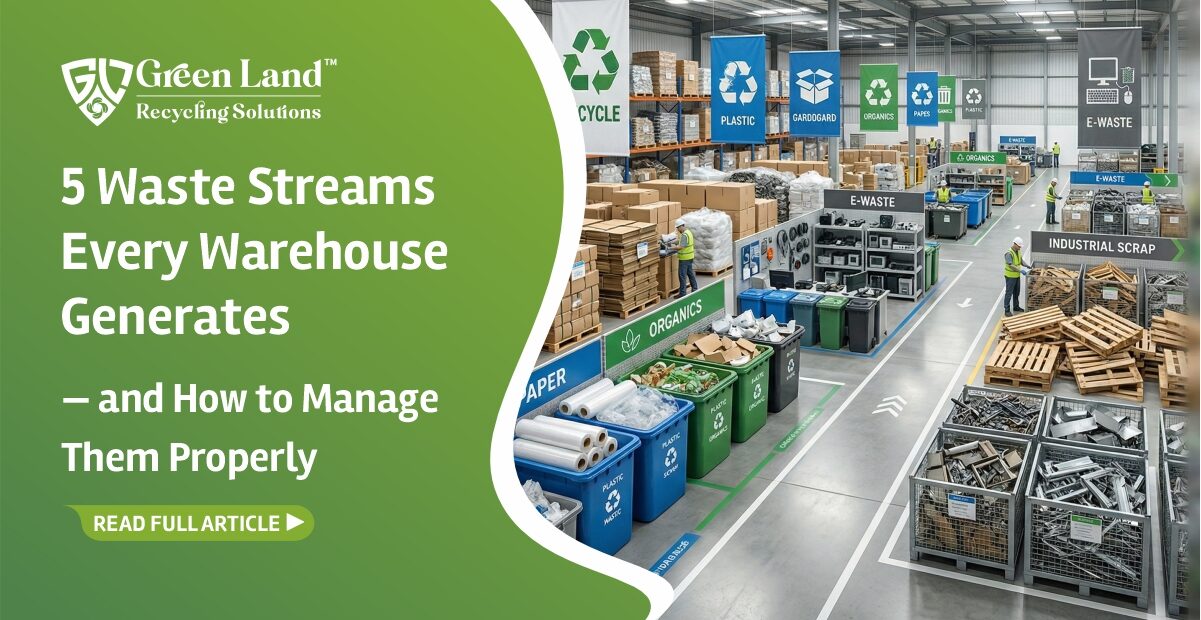
Understanding the five key waste streams in warehouses — and managing each correctly — can transform waste from a problem into a controlled, recoverable resource.
1. Packaging Waste
What it includes:
Cardboard boxes, paper cartons, plastic wrap, shrink film, metal straps.
Why it matters:
Packaging is often the largest waste stream in warehouses. When mixed or contaminated, recyclable materials lose value.
How to manage it:
- Segregate cardboard, plastics, and metals separately
- Keep materials clean and dry
- Use baling or compacting systems for volume reduction
- Schedule regular recycling pickups
2. Damaged or Expired Goods
What it includes:
Broken products, expired inventory, rejected shipments, unsellable goods.
Why it matters:
These items often contain mixed materials (plastic, metal, textile, packaging), making disposal complex.
How to manage it:
- Separate components where possible
- Identify recyclable vs non-recyclable parts
- Use certified recyclers for safe disposal
- Maintain documentation for compliance
3. E-Waste from Operations
What it includes:
Barcode scanners, printers, cables, batteries, outdated IT equipment.
Why it matters:
E-waste contains hazardous materials and sensitive data, requiring specialized handling.
How to manage it:
- Store e-waste separately from general waste
- Ensure secure data destruction
- Partner with certified e-waste recyclers
- Track disposal records for audits
4. Organic Waste (Staff Areas)
What it includes:
Food waste from cafeterias, pantry waste, disposable food packaging.
Why it matters:
Organic waste generates methane emissions in landfills and contaminates dry recyclables.
How to manage it:
- Set up separate bins for food waste
- Avoid mixing with packaging materials
- Use composting or organic recycling solutions
- Train staff on proper segregation
5. Industrial Scrap & Bulk Materials
What it includes:
Wooden pallets, metal scrap, bulk packaging, production offcuts.
Why it matters:
These materials often have high recovery value but require proper handling due to size and volume.
How to manage it:
- Create designated storage zones
- Separate by material type (wood, metal, etc.)
- Arrange bulk collection schedules
- Explore reuse options where possible
Why Proper Waste Management Matters
When these waste streams are managed correctly, warehouses benefit from:
- Reduced disposal costs
- Improved operational efficiency
- Safer working environments
- Better ESG and compliance performance
When ignored, the result is the opposite — higher costs, clutter, and risk.
How Green Land Recycling Solutions Supports Warehouses
At Green Land Recycling Solutions, we help warehouses and industrial facilities across the UAE implement structured waste management systems.
Our services include:
- Waste audits and stream identification
- Segregation planning and setup
- Certified recycling for all major waste streams
- Scheduled collection and logistics
- Compliance-ready documentation
We help transform complex warehouse waste into a streamlined, sustainable system.
The Bottom Line
Warehouses don’t generate just waste — they generate multiple recoverable streams.
The key is not to manage waste as one problem, but as five distinct opportunities.
With the right systems and the right partner, waste becomes organized, manageable, and valuable.