
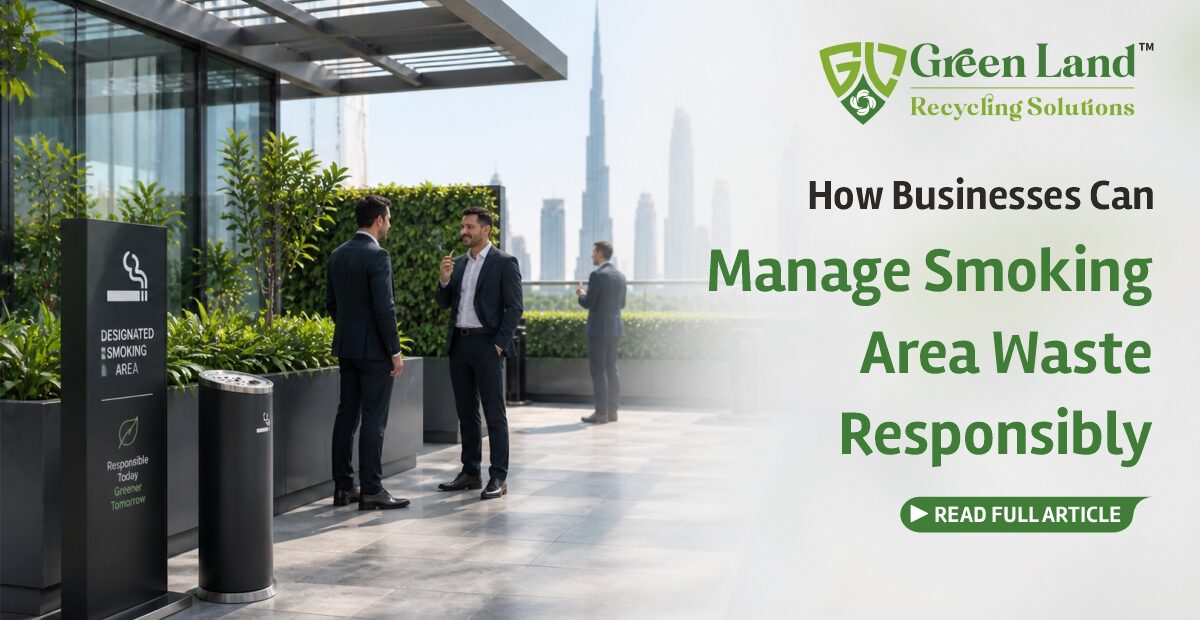
Smoking areas are a common feature across offices, industrial sites, hospitality venues, and commercial spaces in the UAE.
Yet, the waste generated in these zones—primarily cigarette butts, ash, and packaging—is often overlooked.
What appears minor on the surface can quickly become a compliance issue, environmental concern, and brand perception risk.
Managing smoking area waste responsibly is not just about cleanliness.
It’s about control, safety, and sustainability within everyday operations.
Why Smoking Area Waste Deserves Attention
Cigarette waste is one of the most frequently discarded forms of litter globally.
For businesses, unmanaged smoking areas can lead to:
- Unsightly environments that impact brand perception
- Increased cleaning and maintenance costs
- Fire hazards from improperly discarded materials
- Environmental harm due to non-biodegradable filters
In high-footfall or large-scale facilities, these issues can escalate quickly without structured systems in place.
The Hidden Environmental Impact
Cigarette butts are not harmless.
They contain plastic fibres and residual chemicals that can leach into soil and water systems if not handled properly. When mixed with general waste, they are rarely recovered or treated effectively.
For businesses committed to sustainability, ignoring this waste stream creates a gap in otherwise strong ESG practices.
Common Gaps in Current Practices
Many organisations treat smoking area waste as part of general housekeeping.
This often results in:
- No designated disposal systems
- Overflowing or poorly placed ash bins
- Mixing cigarette waste with general waste
- Lack of accountability or monitoring
These gaps reduce efficiency and increase risk—both operational and reputational.
What Responsible Management Looks Like
Effective smoking area waste management is simple—but it requires structure.
1. Designated Disposal Systems
Install clearly marked, fire-safe ashtrays and bins in all smoking zones.
These should be strategically placed and easy to access.
2. Regular Collection and Maintenance
Smoking waste accumulates quickly.
Scheduled clearing ensures bins do not overflow or become a safety hazard.
3. Segregation from General Waste
Cigarette waste should be handled separately to avoid contamination and enable safer disposal processes.
4. Safe Handling and Disposal
Proper handling reduces fire risks and ensures waste is managed in compliance with safety standards.
5. Integration into Broader Waste Systems
Smoking waste should not be treated in isolation.
It should be included within a structured, end-to-end waste management strategy.
The Role of Professional Waste Management Partners
Managing even small waste streams consistently across multiple locations can be challenging.
This is where structured service providers like Green Land Recycling Solutions support businesses by:
- Designing efficient waste handling systems
- Ensuring regular collection and safe disposal
- Integrating smoking waste into broader recycling and waste management processes
- Maintaining compliance and operational consistency
This approach ensures that no waste stream—no matter how small—is left unmanaged.
Business Benefits of Responsible Management
When smoking area waste is handled properly, businesses gain:
- Cleaner, more professional environments
- Reduced operational and maintenance costs
- Improved safety and lower fire risk
- Stronger ESG alignment and environmental responsibility
Most importantly, it demonstrates attention to detail—an often-overlooked factor in brand perception and workplace standards.
The UAE Context: Raising Everyday Standards
As UAE businesses continue to align with sustainability goals and global ESG expectations, even smaller operational areas are coming under scrutiny.
Smoking zones, though routine, are part of the overall business environment.
Managing them responsibly reflects a broader commitment to structured, sustainable operations.
Conclusion: Small Waste, Big Responsibility
Smoking area waste may seem minor compared to bulk or industrial waste.
But its impact—on cleanliness, safety, and sustainability—is significant.
The difference lies in approach.
Handled casually, it becomes a recurring problem.
Handled systematically, it becomes part of a well-managed, responsible operation.Because in modern business environments, every detail contributes to the bigger picture