Food waste doesn’t start at the bin. It often starts much earlier in business operations.
By the time food is discarded, several decisions may already have contributed to its loss. An order placed in excess, an inaccurate demand forecast, a delivery that fails quality checks or a storage issue can turn perfectly usable food into waste before it ever reaches a customer.
For businesses in retail, hospitality, catering, food distribution and food services, understanding these hidden sources is an important step towards reducing waste and improving operational efficiency.
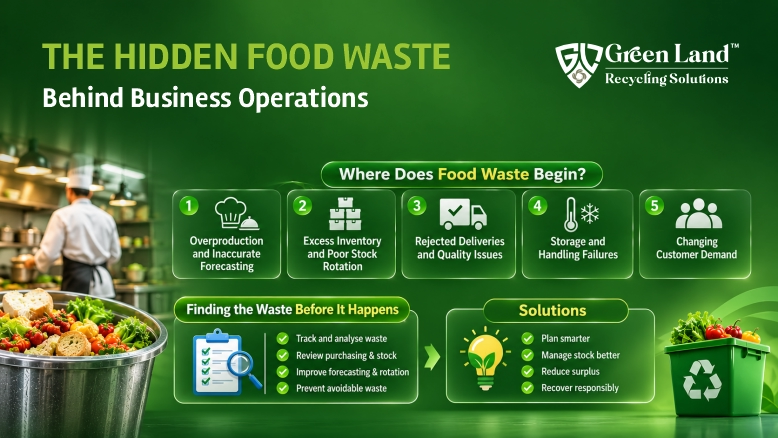
Where Does Food Waste Begin?
1. Overproduction and inaccurate forecasting
Preparing or purchasing more food than customers need is one of the most common sources of avoidable waste. When demand is estimated incorrectly, businesses may end up with excess prepared meals, ingredients or perishable stock. Seasonal changes, customer preferences, events and fluctuating footfall can all affect demand.
2. Excess inventory and poor stock rotation
Bulk purchasing can sometimes offer commercial advantages, but holding more stock than the business can use creates a risk of spoilage. Without effective inventory tracking and stock rotation, older products can remain unnoticed while newer deliveries are used first.
3. Rejected deliveries and quality issues
Food may arrive damaged, incorrectly supplied, outside agreed specifications or with insufficient remaining shelf life. When deliveries are rejected, businesses need a clear process for handling the affected stock. Otherwise, food that might have been safely redirected or recovered can become waste.
4. Storage and handling failures
Incorrect storage temperatures, damaged packaging, unsuitable storage conditions and poor handling practices can shorten the usable life of food. These issues are particularly important for businesses managing large quantities of fresh and perishable products.
5. Changing customer demand
A sudden drop in orders, cancelled bookings, changing menus or unexpected customer preferences can leave businesses with ingredients and prepared food they no longer need. Without flexible purchasing and production plans, surplus can accumulate quickly.
Finding the Waste Before It Happens
The first step is to understand where food is being lost.
Businesses can begin by tracking discarded food by category, quantity, location and reason. Reviewing purchasing records, stock levels, delivery rejections and kitchen or production waste can reveal patterns that might otherwise go unnoticed.
Regular waste audits can help identify whether the main problem is overproduction, spoilage, excess purchasing or storage. Better forecasting, smaller and more frequent orders where practical, clear stock rotation procedures and improved coordination between purchasing and operations can help prevent avoidable waste.
The objective is not simply to discard less. It is to make better operational decisions before food becomes waste.
Managing What Cannot Be Avoided
Even with good planning, some organic waste is unavoidable. Preparation residues, inedible food portions and spoiled materials may still arise during normal business operations.
When edible surplus is safe and suitable for consumption, prevention and appropriate redistribution should be considered first. For organic waste that cannot be prevented or reused, responsible segregation and recovery provide a better route than treating it as ordinary mixed waste.
At Green Land Recycling Solutions, we help businesses explore responsible organic waste management solutions that support better resource recovery and more sustainable waste practices.
The Real Opportunity Is Earlier
Food waste is not just a disposal issue. It is often a sign of missed opportunities in planning, purchasing, storage and operations.
By identifying where waste begins, businesses can reduce avoidable losses, use resources more efficiently and manage unavoidable organic waste responsibly.
Looking to manage food waste from your business operations? Contact Green Land Recycling Solutions to explore responsible organic waste management solutions.