Every business has them.
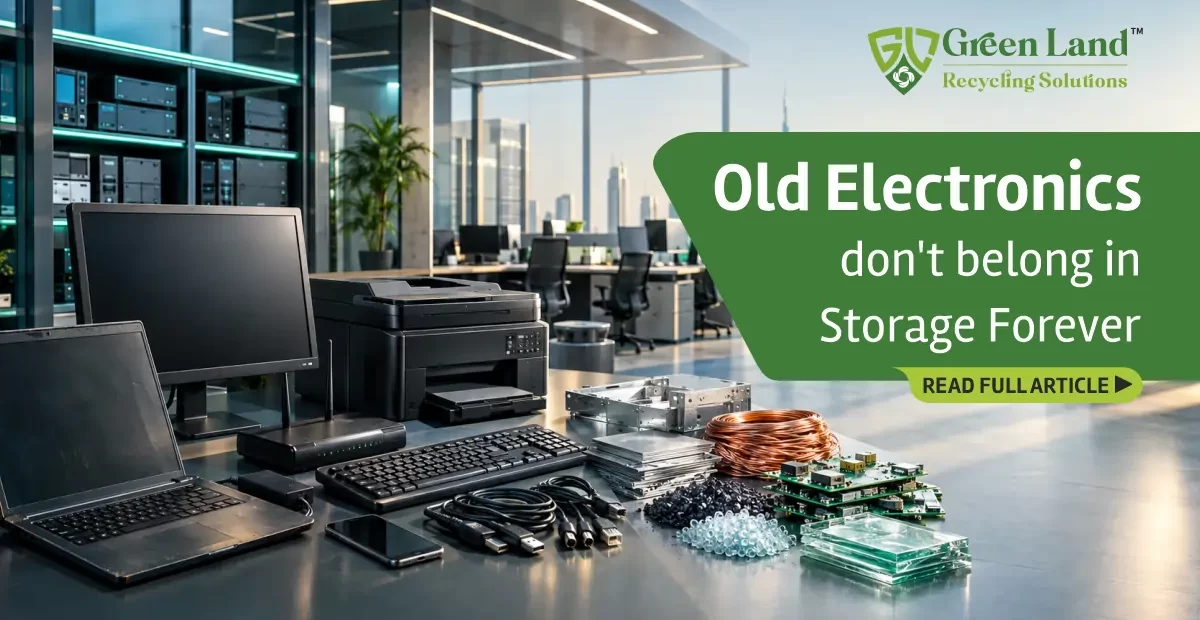
An old laptop sitting in a cupboard. A stack of retired monitors. Phones that were replaced years ago. Outdated printers, routers, keyboards and other equipment waiting for someone to decide what to do with them.
The problem is that “we’ll deal with it later” can quietly turn into long-term storage.
And that creates a different kind of waste problem.
When Temporary Storage Becomes Permanent
Businesses often retain old electronics because they may contain data, have some residual value or simply haven’t been assigned a clear end-of-life process.
Over time, however, storage space becomes occupied by equipment that is no longer contributing to the business.
A few retired devices can quickly become a room, cabinet or warehouse shelf filled with obsolete assets.
For businesses operating in space-conscious environments such as offices, warehouses and commercial facilities, that is an avoidable operational burden.
Old Electronics Need a Plan
The longer obsolete equipment remains untouched, the more complicated it can become to manage.
Devices may become difficult to identify, accessories can get separated, batteries may remain inside equipment and records of ownership or condition can become unclear.
A structured process makes the transition easier.
Businesses can periodically identify equipment that is no longer required, separate reusable assets from end-of-life equipment, address data-security requirements and establish appropriate channels for responsible recycling.
There’s More Than Waste Inside a Device
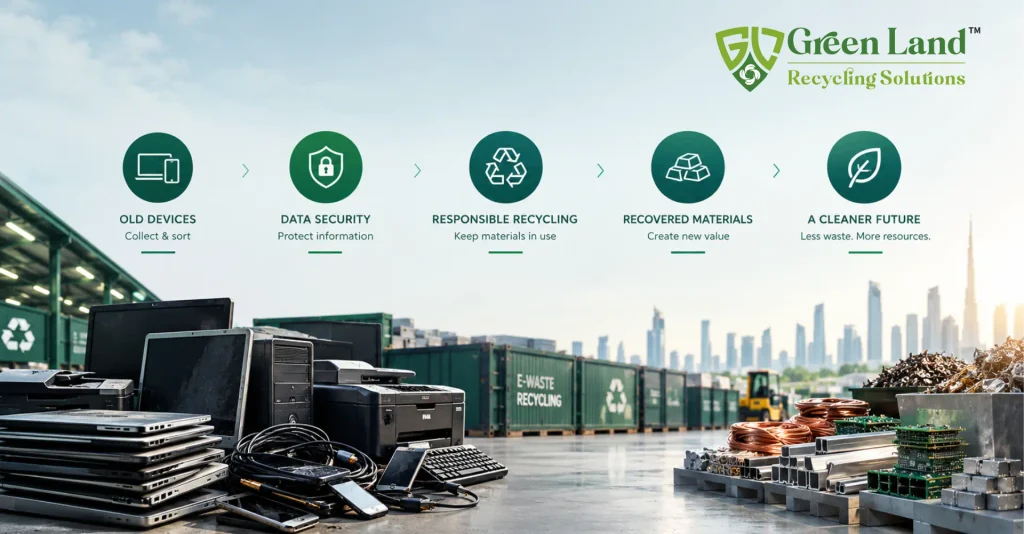
Electronics contain a mixture of materials, including plastics, aluminium, copper, steel, glass and electronic components.
Sending obsolete equipment into appropriate e-waste recovery streams can help keep these materials in circulation rather than allowing valuable resources to remain locked away in storage.
Responsible e-waste management is therefore not simply about clearing space.
It is about recovering value from assets that have reached the end of their useful life.
Make Room for What’s Next
A good technology lifecycle doesn’t end when a new device arrives.
It also includes deciding what happens to the old one.
Regular asset reviews, designated collection areas and responsible recycling processes can help businesses keep storage organised while ensuring obsolete electronics move towards appropriate recovery.
At Green Land Recycling Solutions, we help businesses responsibly manage end-of-life electronic equipment and direct recoverable materials towards appropriate recycling and resource-recovery streams.
Because old electronics don’t belong in storage forever.
They need a next step.