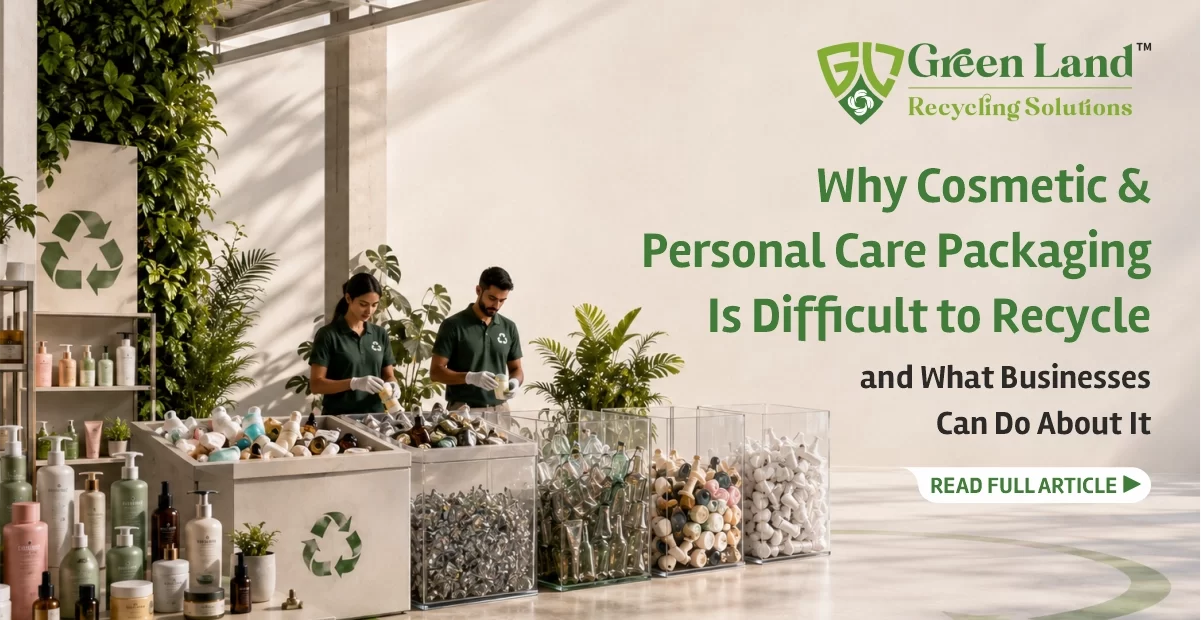
The beauty and personal care industry relies heavily on packaging. From shampoo bottles and lotion dispensers to cosmetic containers and product tubes, packaging plays a critical role in product protection, branding, and customer experience.
However, when these products reach the end of their lifecycle, recycling becomes far more complex than many businesses realise.
Unlike standard packaging materials, cosmetic and personal care packaging often combines multiple materials within a single product. A typical container may include plastic, metal springs, pumps, labels, adhesives, and residual product contents. These mixed-material designs make separation and recycling significantly more challenging.
The problem becomes even greater when expired stock, damaged inventory, or returned products enter the waste stream.
For retailers, distributors, manufacturers, and hospitality businesses, large volumes of cosmetic waste can quickly accumulate in warehouses and storage facilities. Without proper segregation and recycling processes, these materials often end up in general waste despite containing recoverable resources.
One of the biggest obstacles to effective recycling is contamination. Even recyclable packaging can become difficult to process when it contains leftover creams, liquids, gels, or other cosmetic products. Once contaminated, recovery rates decrease and disposal costs often increase.
This is why structured waste segregation is essential. Separating packaging materials, expired inventory, and recyclable components at the source helps improve recovery outcomes and supports more efficient commercial recycling processes.
At Green Land Recycling Solutions, businesses across the UAE are supported with responsible handling of expired products, bulk waste, packaging materials, and specialised recycling streams. Through systematic collection, segregation, and material recovery processes, organisations can divert significant volumes of cosmetic and personal care waste away from landfill.
Beyond improving recycling performance, responsible packaging management also supports broader business goals. Companies can reduce waste disposal costs, optimise storage space, strengthen ESG reporting, and demonstrate commitment to sustainable business practices.
As sustainability expectations continue to grow, businesses are increasingly being asked not only what they sell, but also how they manage products once they become waste. Cosmetic packaging presents unique recycling challenges, but it also presents an opportunity to improve resource recovery and support circular economy objectives.
The most sustainable packaging strategy does not begin when a product is manufactured. It begins when businesses plan for what happens after that product reaches the end of its useful life. With the right recycling partner and waste management processes in place, even complex packaging can become part of a more responsible and recoverable future.