Recycling failure rarely starts at the recycling facility.
It usually starts much earlier — at the bin.
Across offices, warehouses, factories, hotels, and retail spaces in the UAE, mixed waste remains the single biggest obstacle to effective recycling. When food waste, plastics, paper, e-waste, and hazardous materials are thrown together, even recyclable materials often become unusable.
For businesses aiming to reduce costs, improve ESG performance, and comply with upcoming regulations, fixing mixed waste is one of the fastest wins available.
Why Mixed Waste Is a Serious Business Problem
1. It Increases Disposal Costs
Mixed waste typically ends up being treated as general waste. This means:
- Higher landfill fees
- More handling charges
- Missed opportunities to recycle valuable materials
Recyclable plastics, paper, metals, and electronics lose their value the moment they’re contaminated.
2. It Reduces Recycling Efficiency
Recycling facilities are designed to process segregated materials, not sort through trash.
When waste arrives mixed:
- Entire loads may be rejected
- Recycling rates drop
- Recovery becomes inefficient
- More waste ends up in landfills
Even one incorrect item can compromise an entire batch.
3. It Creates Compliance Risks
With stricter UAE recycling regulations approaching, improper segregation can expose businesses to:
- Audit failures
- Missing documentation
- ESG reporting gaps
- Regulatory scrutiny
Mixed waste makes it difficult to prove responsible disposal.
4. It Raises Safety Concerns
Batteries, aerosols, chemicals, and electronics mixed with general waste increase the risk of:
- Fires
- Chemical leaks
- Equipment damage
- Worker safety incidents
In the UAE’s hot climate, these risks escalate quickly.
How Businesses Can Fix the Mixed Waste Problem
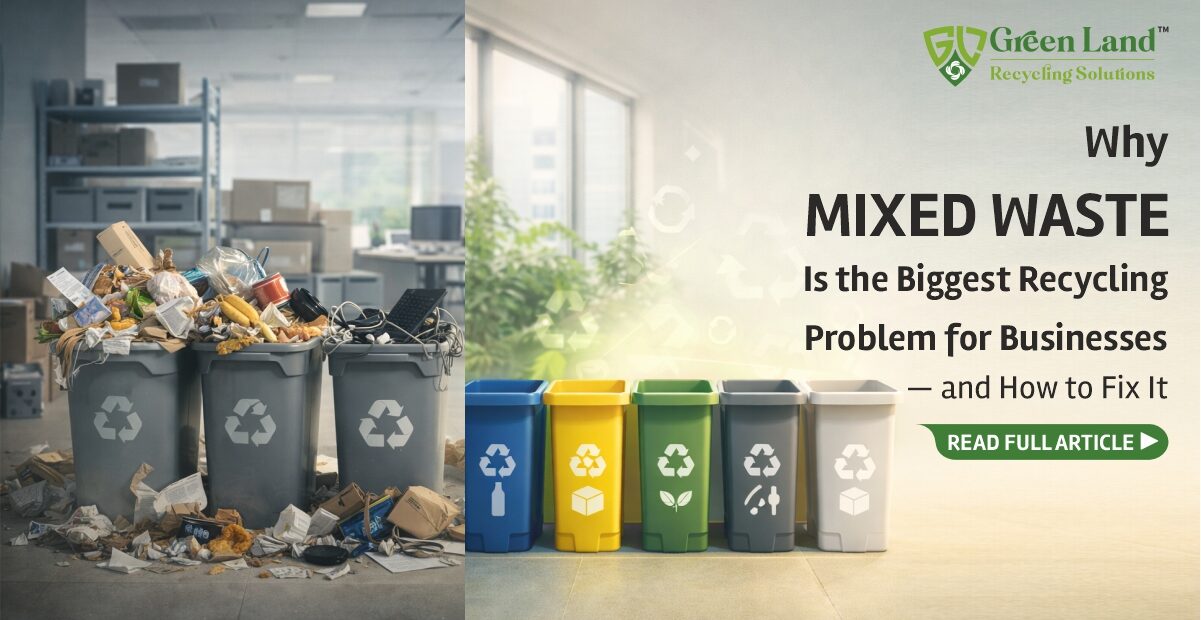
1. Start with Simple Segregation
You don’t need complex systems. Begin with clear categories:
- Dry recyclables (paper, cardboard, plastics)
- Organic waste
- E-waste and batteries
- General waste
Clear separation alone can dramatically improve recycling outcomes.
2. Use Clear Bin Labelling
Color-coded bins with simple signage reduce confusion and improve compliance among staff.
3. Train Employees Briefly
Short awareness sessions help teams understand:
- What goes where
- Why segregation matters
- How their actions affect recycling success
Small behaviour changes create big results.
4. Work with a Certified Recycling Partner
A professional recycler helps you:
- Identify waste streams
- Set up segregation systems
- Handle specialized waste safely
- Provide recycling certificates and reports
How Green Land Recycling Solutions Helps
At Green Land Recycling Solutions, we help UAE businesses eliminate mixed waste through:
- Waste audits and segregation guidance
- Certified recycling for plastics, e-waste, organics, textiles, batteries, and FMCG waste
- Dubai Municipality–approved processes
- Clear documentation for compliance and ESG reporting
The Bottom Line
Mixed waste is expensive, inefficient, and risky.
Segregated waste is valuable, compliant, and sustainable.
Fixing mixed waste doesn’t require massive investment — just the right systems, awareness, and recycling partner. With Green Land Recycling Solutions, businesses can recycle smarter, reduce costs, and stay future-ready.