
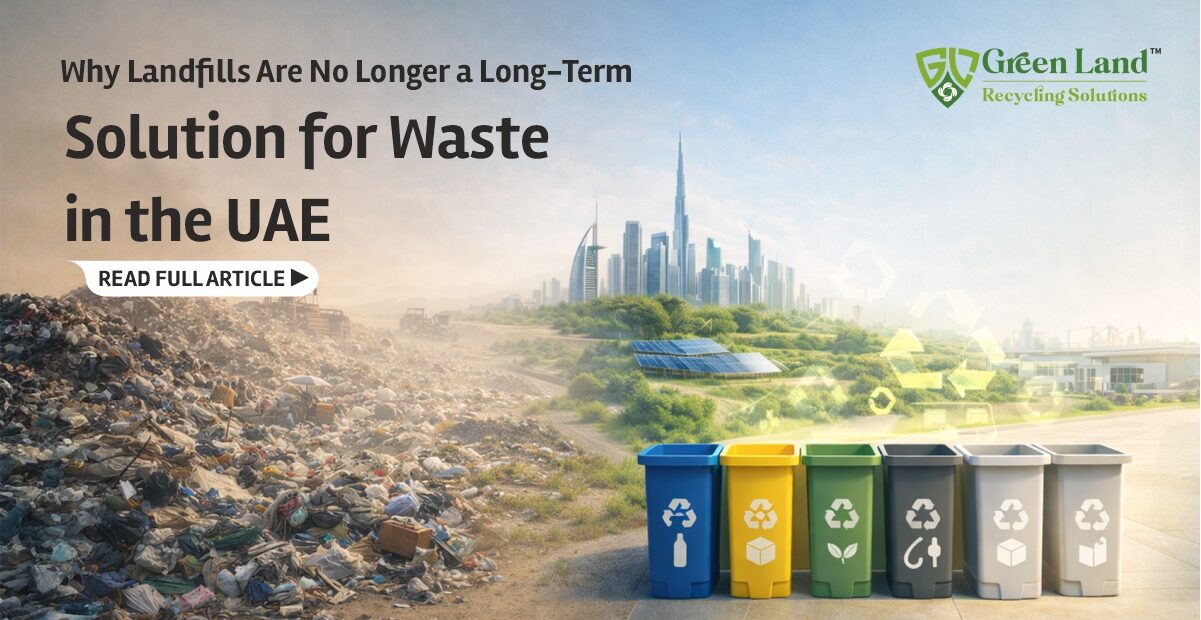
For decades, landfills have been the default destination for waste across the world. But in the UAE — a nation known for its rapid development and sustainability leadership — this approach is quickly becoming outdated. As waste volumes grow and environmental priorities intensify, landfills are no longer seen as a sustainable long-term solution.
Today, the UAE is actively shifting toward recycling, resource recovery, and circular waste management. For businesses, understanding this transition is essential for compliance, cost control, and environmental responsibility.
The Growing Waste Challenge
The UAE generates millions of tonnes of waste annually across commercial, industrial, and residential sectors. Rapid urban growth, expanding retail and hospitality industries, and rising consumption patterns continue to increase waste generation.
Landfills, however, have physical limits. With limited land availability and rising waste volumes, relying solely on landfill disposal is becoming increasingly unsustainable.
Environmental Risks of Landfills
Methane Emissions from Organic Waste
When food and organic waste decompose in landfills without oxygen, they release methane — a greenhouse gas significantly more potent than carbon dioxide. In the UAE’s high temperatures, this decomposition accelerates, increasing environmental impact.
Soil and Groundwater Contamination
Landfills can leak harmful chemicals into surrounding soil and water systems. Over time, this affects ecosystems, agriculture, and natural resources.
Fire and Safety Risks
Improperly disposed batteries, electronics, chemicals, and aerosols can trigger landfill fires. These incidents pose serious environmental and public safety risks.
Economic and Operational Limitations
Landfills do not recover value from waste. Instead, they convert reusable materials into permanent environmental burdens. Businesses disposing waste through landfills often face:
- Rising disposal costs
- Lost resource recovery opportunities
- Increased regulatory scrutiny
- ESG reporting challenges
Recyclable materials such as plastics, metals, textiles, electronics, and packaging all carry potential economic value when properly processed.
The UAE’s Shift Toward a Circular Waste Economy
The UAE is actively implementing policies to reduce landfill dependency. Initiatives such as plastic reduction strategies, waste diversion targets, and national sustainability programs are encouraging recycling and responsible waste management across industries.
The country’s long-term environmental vision focuses on transforming waste into reusable resources rather than treating it as disposable material.
How Businesses Can Prepare
Organizations can support this transition by:
- Segregating waste at source
- Partnering with certified recycling providers
- Tracking waste data for ESG and compliance reporting
- Implementing sustainable procurement and packaging practices
These steps not only support environmental goals but also improve operational efficiency.
How Green Land Recycling Solutions Supports the Transition
At Green Land Recycling Solutions, we help businesses reduce landfill dependency through certified recycling services for plastics, organic waste, e-waste, textiles, batteries, and specialized waste streams.
Our end-to-end waste management approach includes collection, segregation guidance, recycling processing, and compliance-ready documentation. By diverting waste from landfills, we help organizations reduce environmental impact while strengthening sustainability performance.
The Future of Waste in the UAE
Landfills once served as a practical solution for waste disposal. Today, they represent lost resources and environmental risk. As the UAE advances toward a circular economy, recycling and resource recovery are becoming the new standard.
Businesses that adapt early will not only stay compliant but also contribute to building a cleaner, more sustainable future.
With Green Land Recycling Solutions, waste doesn’t end in landfills — it begins a new cycle of value.