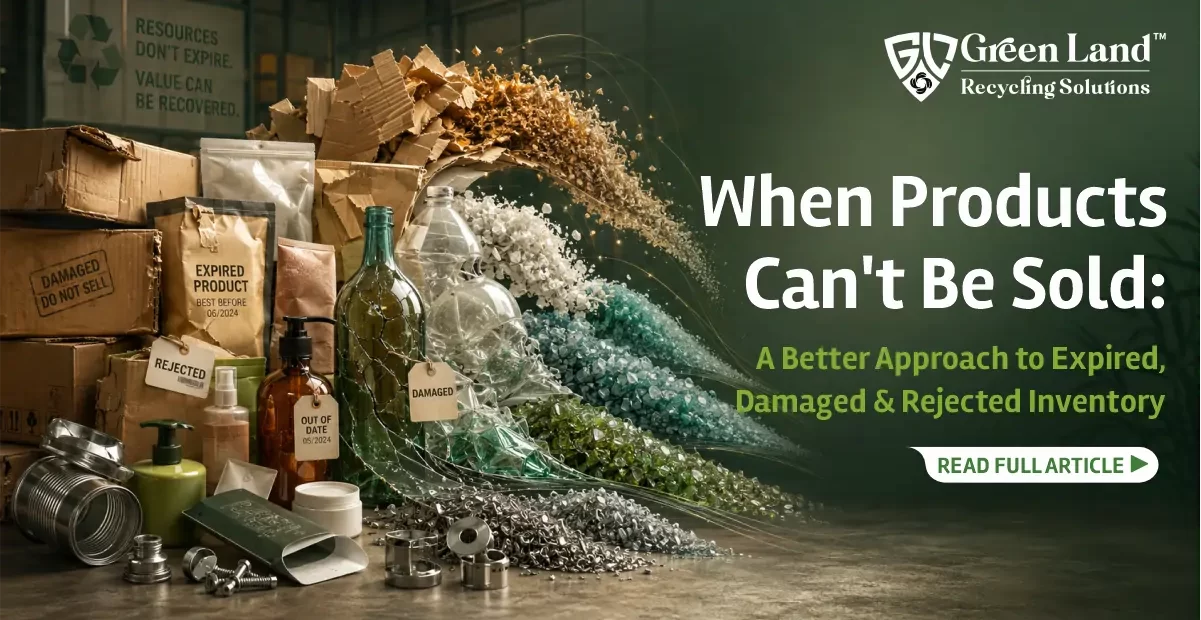
For businesses, unsellable inventory is often treated as a storage problem. Expired products, damaged goods, rejected consignments, obsolete stock, and returned items can quickly occupy valuable warehouse space and eventually end up in the general waste stream.
But disposal should not be the first or only option.
A better approach begins with understanding what the inventory is made of and identifying which components can still be recovered. This is where commercial waste management and responsible recycling can help businesses turn a difficult inventory problem into an opportunity for resource recovery.
An expired product may no longer be suitable for sale, but its packaging can still contain recyclable materials. Cardboard cartons, plastic containers, glass bottles, metal components, paper inserts, and other packaging materials may retain value when properly segregated. The same applies to damaged or rejected inventory, where the product itself may be unusable while several of its material components remain recoverable.
The first step is to assess the inventory. Businesses should identify the type of products involved, separate different materials, and determine whether they can be reused, recycled, or require specialised handling. Mixing everything into a single disposal stream can make recovery more difficult and reduce the value of recyclable materials.
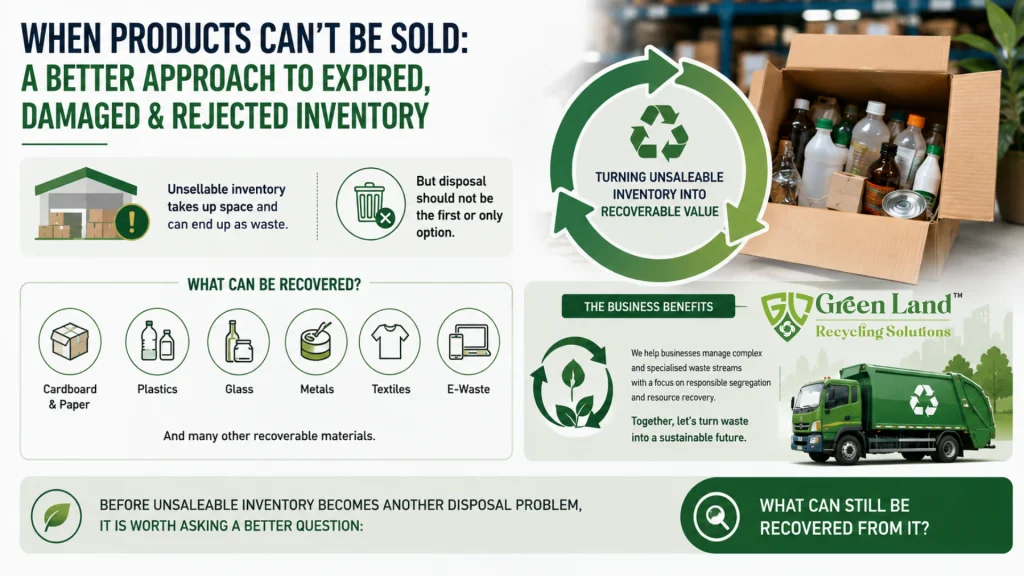
At Green Land Recycling Solutions, businesses can access structured support for managing complex and specialised commercial waste streams. From expired stock and damaged inventory to packaging waste, plastics, metals, glass, textiles, electronic waste, and other recoverable materials, the focus is on responsible segregation and resource recovery.
A structured approach can also improve operational efficiency. Clearing obsolete inventory frees valuable storage space, reduces warehouse clutter, simplifies stock management, and helps businesses avoid carrying unnecessary materials from one operational cycle into the next.
For organisations with regular volumes of rejected or expired products, developing a clear disposal and recycling process can support wider sustainability and ESG goals. It also provides greater visibility into where materials are going and how much can potentially be diverted from general waste.
The real value of responsible commercial waste management lies in looking beyond the product itself. A product may have reached the end of its commercial life, but that does not mean every material within it has reached the end of its useful life.
Before unsellable inventory becomes another disposal problem, it is worth asking a better question: What can still be recovered from it?