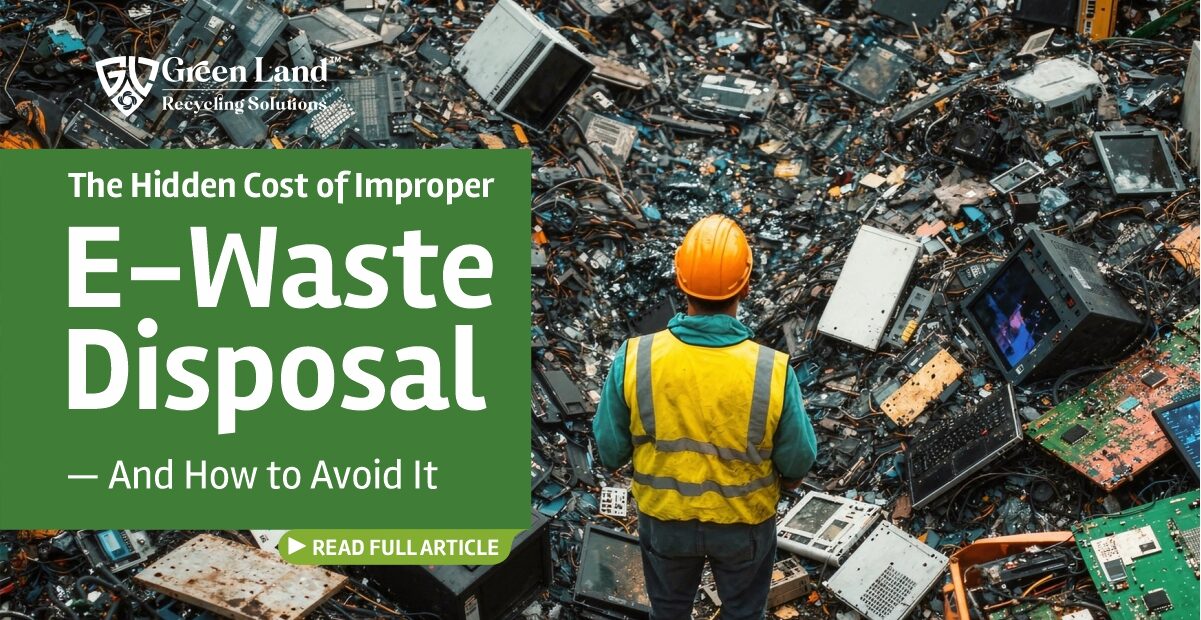
Electronic devices are an essential part of modern business operations. Offices, warehouses, factories, and logistics hubs rely on computers, servers, printers, scanners, and communication devices every day. But when these devices reach the end of their lifecycle, many companies overlook an important question: What happens to the e-waste?
Improper e-waste disposal may appear convenient, but it carries hidden costs that can affect businesses financially, legally, and environmentally.
Data Security Risks
One of the biggest hidden dangers of improper e-waste disposal is data exposure. Old laptops, servers, and hard drives often contain confidential company data, financial records, employee information, or customer details.
If devices are discarded without proper data destruction, this information can be recovered by unauthorized parties. Data breaches can lead to serious consequences including reputational damage, legal liability, and significant financial losses.
Secure data destruction methods such as hard drive shredding and data degaussing ensure that sensitive information cannot be recovered.
Environmental Damage
Electronic waste contains hazardous materials such as lead, mercury, cadmium, and other toxic substances. When these materials are disposed of improperly or sent to landfills, they can contaminate soil and groundwater.
In regions with extreme heat like the UAE, improper disposal can also increase the risk of chemical leakage and environmental pollution. Responsible recycling ensures that hazardous components are handled safely while recoverable materials are reused.
Fire and Safety Hazards
Many electronic devices contain lithium-ion batteries, which can become dangerous when damaged or improperly disposed of. When mixed with general waste, these batteries can overheat and ignite, causing fires in waste facilities or transportation vehicles.
Proper e-waste handling significantly reduces these safety risks.
Lost Resource Value
Electronics contain valuable materials such as copper, aluminium, and precious metals. When devices are thrown away as general waste, these materials are permanently lost.
Recycling allows these components to be recovered and reused in manufacturing, supporting a circular economy and reducing the need for raw material extraction.
Compliance and Reputation Risks
Governments and regulatory bodies are placing increasing focus on responsible waste management and environmental accountability. Companies that fail to dispose of electronic waste responsibly may face regulatory scrutiny and reputational damage.
Businesses are also increasingly evaluated based on their ESG (Environmental, Social, and Governance) performance, making responsible recycling a critical part of corporate sustainability strategies.
How Businesses Can Avoid These Risks
Organizations can reduce the risks associated with e-waste disposal by implementing a structured approach:
- Identify and segregate electronic waste separately from general waste
- Establish secure processes for data destruction
- Track and document device disposal
- Partner with certified recycling providers
These steps help ensure both environmental responsibility and operational security.
How Green Land Recycling Solutions Can Help
At Green Land Recycling Solutions, we provide professional e-waste recycling services designed for businesses across the UAE. Our services include secure data destruction, hardware shredding, IT asset recovery, and certified recycling processes.
We help organizations manage electronic waste responsibly while protecting sensitive data and ensuring compliance with environmental standards.
The Bottom Line
Improper e-waste disposal may seem like a minor operational issue, but its consequences can be significant. Data breaches, environmental damage, safety hazards, and lost resources are all hidden costs that businesses cannot afford to ignore. By adopting responsible e-waste recycling practices and working with experienced recycling partners like Green Land Recycling Solutions, businesses can protect both their operations and the environment.