
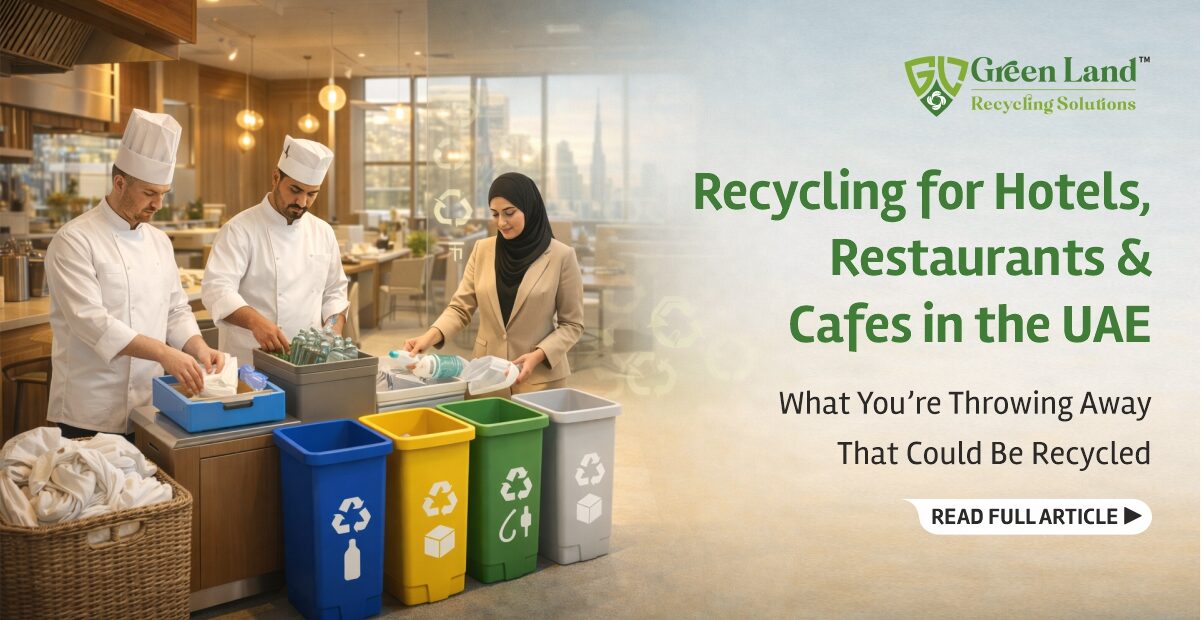
The UAE’s hospitality sector is one of the fastest-growing in the region, driven by tourism, business travel, and luxury dining experiences. But behind every busy kitchen, banquet hall, and café counter lies a challenge many establishments underestimate — waste management.
Hotels, restaurants, and cafés generate significant volumes of waste every day. Much of this waste is often treated as general disposal, even though a large portion can be recycled responsibly. Understanding what can be recycled is the first step toward reducing costs, improving sustainability performance, and supporting the UAE’s environmental goals.
Food Waste: The Largest Hidden Opportunity
Food waste forms one of the biggest waste streams in the hospitality industry. Leftover buffet items, expired ingredients, preparation scraps, and kitchen surplus are commonly sent to landfills.
When organic waste decomposes in landfills, it releases methane, a greenhouse gas that significantly contributes to climate change. However, when recycled correctly, food waste can be processed into compost, helping support landscaping, agriculture, and soil restoration initiatives.
Packaging Waste from Deliveries and Storage
Hotels and restaurants receive daily shipments of ingredients and supplies, generating large amounts of packaging materials such as:
- Cardboard boxes
- Cartons and paper packaging
- Plastic containers and shrink wraps
- Metal food tins
These materials are widely recyclable when segregated and kept free from food contamination. Proper handling can divert significant volumes of waste from landfills while reducing disposal costs.
Glass Waste from Beverage Services
Bars, restaurants, and banquet operations produce substantial glass waste from bottles and jars. Glass is highly recyclable and can be processed repeatedly without losing quality.
Segregating glass waste helps improve recycling efficiency and supports circular material recovery.
Textiles and Hospitality Furnishings
Hotels frequently replace linens, uniforms, tablecloths, and curtains. These materials often end up discarded as general waste, even though textile recycling can recover fibres and reduce landfill impact.
Used Cooking Oil and Specialized Waste
Hospitality establishments also generate waste streams that require professional handling, including:
- Used cooking oil
- Aerosol containers
- Cleaning chemical packaging
- Expired food and beverage stock
Proper recycling and disposal prevent environmental contamination and ensure regulatory compliance.
Why Recycling Matters for the Hospitality Industry
Implementing recycling systems helps hospitality businesses:
- Reduce landfill and disposal costs
- Improve sustainability ratings and ESG performance
- Meet regulatory requirements
- Strengthen brand reputation among environmentally conscious guests
Sustainability is increasingly influencing guest expectations, making responsible waste management a competitive advantage.
How Green Land Recycling Solutions Supports Hospitality Businesses
At Green Land Recycling Solutions, we help hotels, restaurants, and cafés across the UAE implement structured recycling programs. Our services include waste audits, segregation planning, certified recycling, and compliance reporting.
We manage multiple waste streams including organic waste, packaging materials, glass, plastics, textiles, e-waste, and specialized hospitality waste — helping establishments recycle responsibly and operate sustainably.
The Bottom Line
The hospitality industry produces more recyclable waste than many businesses realize. What is often thrown away as trash can become a valuable resource when handled correctly.
With the right recycling systems and support from Green Land Recycling Solutions, hotels, restaurants, and cafés can reduce environmental impact while improving operational efficiency and sustainability performance.