
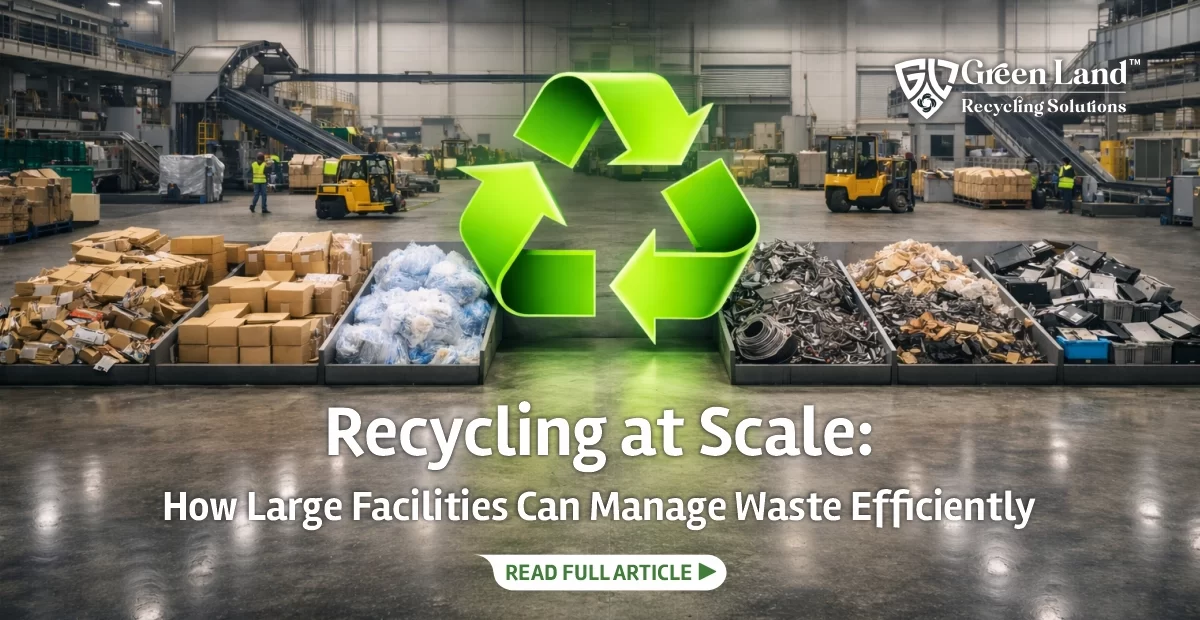
Large facilities such as warehouses, logistics hubs, manufacturing plants, and industrial complexes play a vital role in the UAE’s economic growth. These facilities move enormous volumes of goods daily, and with that activity comes a significant amount of waste.
From packaging materials and pallets to production scraps and outdated equipment, large operations generate waste at a scale that requires structured management. Without proper systems in place, waste quickly becomes a costly operational burden.
Recycling at scale is not simply about placing bins around the facility. It requires planning, coordination, and the right recycling partner to ensure waste is handled efficiently and responsibly.
Understanding the Waste Streams in Large Facilities
Large facilities typically generate several types of waste simultaneously. Common waste streams include:
- Cardboard boxes and paper packaging from shipments
- Plastic shrink wrap and pallet film used in logistics
- Wooden pallets and crates
- Metal straps and packaging materials
- Industrial scrap and production waste
- E-waste such as cables, batteries, and outdated equipment
- Damaged or expired inventory
When these materials are mixed together, recycling becomes difficult and expensive. Identifying and separating these waste streams is the first step toward efficient recycling.
The Importance of Segregation at Source
For large facilities, segregation is critical. When recyclable materials are separated at the point where waste is generated, they can be processed more efficiently.
Facilities should introduce dedicated areas or clearly marked bins for different materials such as cardboard, plastics, metals, organic waste, and electronics. Clear signage and color-coded containers help employees follow the system consistently.
Proper segregation improves recycling rates and reduces the amount of waste sent to landfills.
Optimizing Collection and Storage
Large facilities often struggle with waste accumulation. Overflowing waste areas can create safety hazards and disrupt operations.
Designating organized waste collection zones and scheduling regular pickups helps maintain efficiency. Compactors and baling systems can also reduce the volume of recyclable materials like cardboard and plastic film, making transport more efficient.
Improving Operational Efficiency
Effective recycling systems can improve day-to-day operations. When waste is organized and removed regularly, facilities benefit from:
- Cleaner and safer working environments
- Reduced risk of fire hazards from batteries or chemicals
- More efficient use of storage space
- Lower disposal costs
Waste management becomes part of operational efficiency rather than an afterthought.
Meeting Sustainability and Compliance Goals
Environmental regulations and sustainability expectations are becoming more important for businesses across the UAE. Large facilities are often required to track waste streams and demonstrate responsible disposal practices.
Structured recycling programs help companies meet ESG goals, improve environmental performance, and comply with evolving waste management regulations.
How Green Land Recycling Solutions Supports Large Facilities
At Green Land Recycling Solutions, we work with warehouses, logistics companies, factories, and industrial facilities across the UAE to implement efficient recycling systems.
Our services include waste audits, segregation planning, certified recycling processes, and scheduled waste collection. We manage multiple waste streams including plastics, paper, metals, e-waste, textiles, and specialized industrial waste.
By partnering with a professional recycler, large facilities can transform waste management into a structured and sustainable operation.
The Future of Industrial Waste Management
As supply chains grow and industrial activity expands, waste management will continue to play a critical role in operational success. Facilities that adopt efficient recycling systems today will be better positioned to reduce costs, meet sustainability goals, and support the UAE’s transition toward a circular economy.
With the right systems and the right partner, recycling at scale becomes not just possible — but efficient and impactful.
