As sustainability becomes a business priority across the UAE, many organisations are looking to introduce recycling programs within their offices. While the intention is strong, companies often don’t know where to begin. Setting up an effective recycling system doesn’t require complicated infrastructure — it requires the right process, awareness, and support.
A well-designed office recycling program not only reduces landfill waste but also helps businesses meet regulatory expectations, improve ESG performance, and reduce waste disposal costs.
Here’s a simple step-by-step guide to getting started.
Step 1: Conduct a Waste Audit
Before introducing recycling, businesses need to understand what waste they generate. A waste audit helps identify the types and volumes of waste produced daily.
Most UAE offices typically generate:
- Paper and cardboard packaging
- Plastic bottles and food packaging
- Pantry and organic waste
- E-waste such as cables, batteries, and outdated electronics
- Promotional or textile waste like uniforms and banners
A waste audit allows companies to design recycling systems that are practical and efficient.
Step 2: Set Up Segregated Recycling Bins
Once waste streams are identified, the next step is segregation at source.
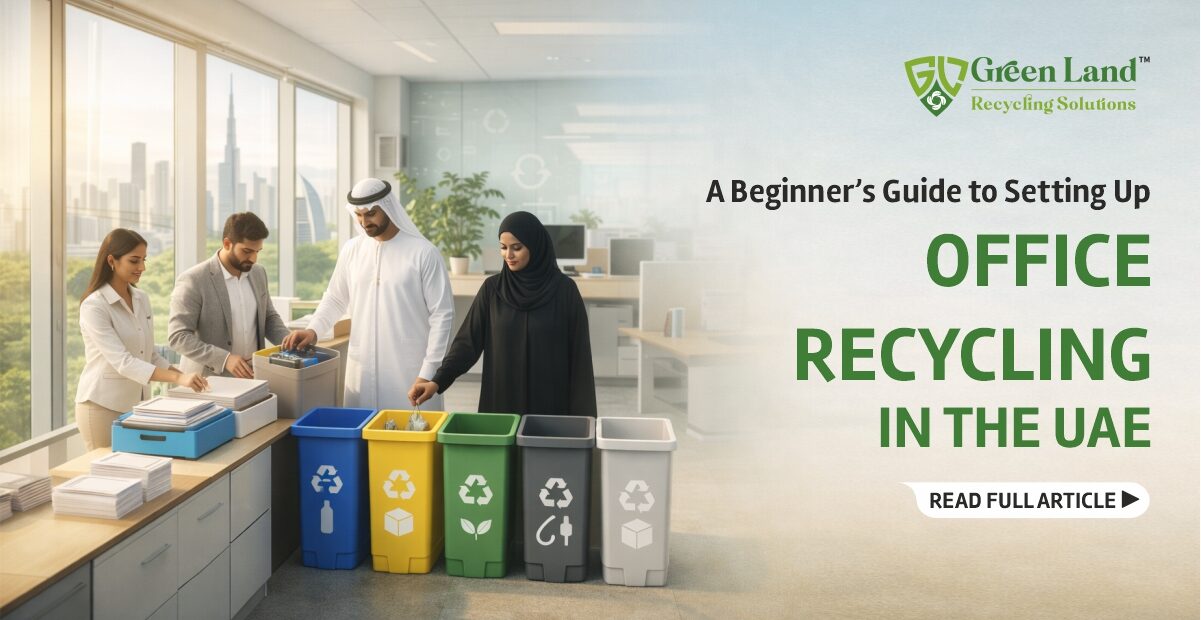
Offices should introduce clearly labelled bins for:
- Dry recyclables (paper, plastics, metals)
- Organic or pantry waste
- E-waste and batteries
- General waste
Color-coded bins and simple signage significantly improve participation and reduce contamination.
Step 3: Create Staff Awareness
Even the best recycling infrastructure fails without employee participation.
Short awareness sessions help staff understand:
- Why recycling is important
- What materials go into each bin
- How their actions support sustainability goals
Clear internal communication and visual reminders encourage long-term behavioural change.
Step 4: Partner with a Certified Recycling Provider
A professional recycling partner ensures waste is handled responsibly and in compliance with UAE regulations.
Certified providers offer:
- Scheduled waste collection
- Safe handling of specialized waste
- Recycling certificates and documentation
- Guidance on improving waste management systems
Working with an approved recycler ensures recycling efforts translate into measurable environmental impact.
Step 5: Monitor and Improve the System
Recycling programs should be reviewed regularly.
Monitoring helps businesses:
- Track waste diversion rates
- Identify contamination issues
- Measure sustainability progress
- Improve ESG reporting
Continuous improvement ensures the recycling program remains effective as office operations grow.
How Green Land Recycling Solutions Supports Office Recycling
At Green Land Recycling Solutions, we help UAE offices implement structured recycling programs from start to finish. Our services include waste audits, segregation planning, certified recycling, staff guidance, and compliance-ready reporting.
We manage multiple waste streams including plastics, e-waste, organic waste, textiles, packaging waste, and specialized corporate waste, helping businesses achieve sustainability goals efficiently.
Final Thought
Setting up office recycling is not about perfection — it’s about progress. Small operational changes can create measurable environmental impact while strengthening compliance and corporate responsibility.
With the right systems and support from Green Land Recycling Solutions, UAE offices can transition from simple waste disposal to meaningful recycling and circular resource management.