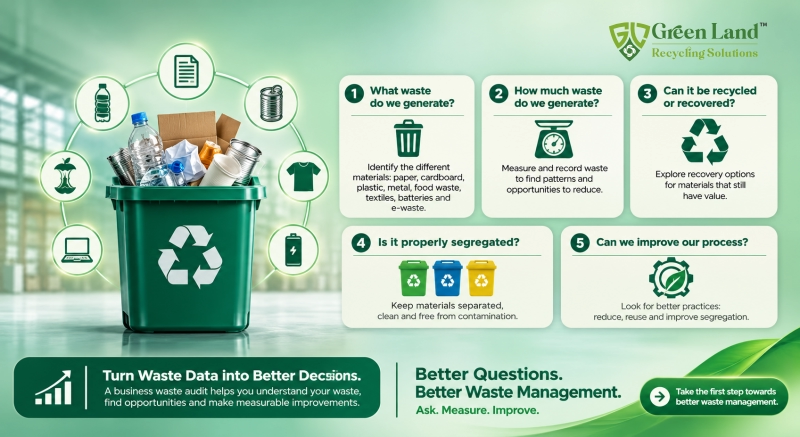
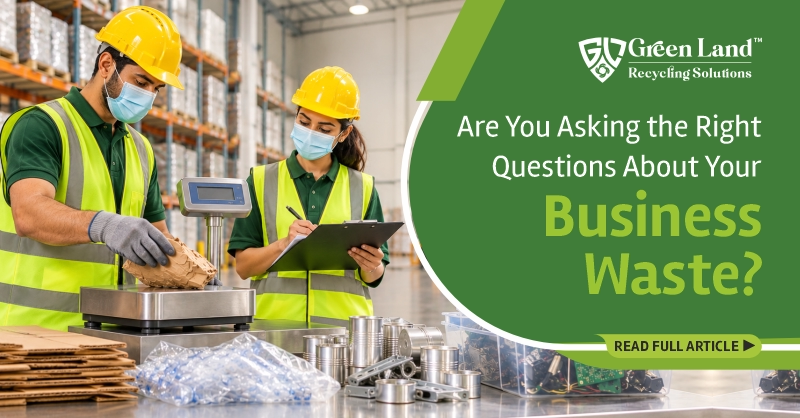
What waste do we generate? How much do we generate? Can it be recycled? Is it properly segregated? Can we improve our process?
These may sound like simple questions, but they can reveal a great deal about how efficiently a business manages its resources.
Whether you operate an office, warehouse, hotel, retail outlet or industrial facility, waste is a regular part of your operations. Yet many businesses focus on collection and disposal without fully understanding what they generate, where it comes from or how much of it could be recovered.
The first step towards better waste management is asking the right questions.
Start by Understanding Your Waste
1. What waste do we generate?
Begin by identifying the different materials your business produces. These could include paper, cardboard, plastic, metal, food waste, textiles, batteries and electronic waste. Understanding the types of materials generated helps establish which waste streams need separate attention.
2. How much waste do we generate?
Knowing the quantity matters just as much as knowing the material. Weighing and recording waste over a defined period can reveal patterns, high-volume waste streams and opportunities to reduce unnecessary generation. It also gives businesses a baseline against which future improvements can be measured.
3. Can it be recycled or recovered?
Not every discarded material is necessarily waste with no further value. Depending on its condition, composition and available recovery options, many materials may be suitable for recycling or other forms of recovery. Identifying these opportunities helps businesses move beyond a disposal-focused approach.
4. Is it properly segregated?
Even recyclable materials can lose their recovery potential when different waste streams are mixed. A waste assessment should examine whether materials are separated correctly, stored appropriately and kept free from contamination. Clear labels, accessible collection points and staff awareness all contribute to better segregation.
5. Can we improve our process?
Once the information is available, businesses can identify practical improvements. These may include better purchasing practices, reduced packaging, improved stock management, revised segregation procedures or more suitable recycling arrangements. The goal is to build a waste management process that works efficiently and consistently.
Turn Waste Data into Better Decisions
A business waste audit brings these questions together in a structured assessment. By examining waste types, measuring quantities, reviewing segregation and identifying recovery opportunities, businesses gain a clearer picture of their current practices.
More importantly, they gain a starting point for improvement.
At Green Land Recycling Solutions, we help businesses explore responsible waste management and recycling solutions for different material streams. Understanding what your business generates is an important first step towards identifying the right approach.
Better Questions. Better Waste Management.
Effective waste management doesn’t begin with a collection schedule. It begins with understanding what needs to be managed.
Ask the questions. Measure the materials. Identify the opportunities. Then make improvements that can be tracked over time.
Take the first step towards better waste management. Contact Green Land Recycling Solutions to explore solutions for your business.