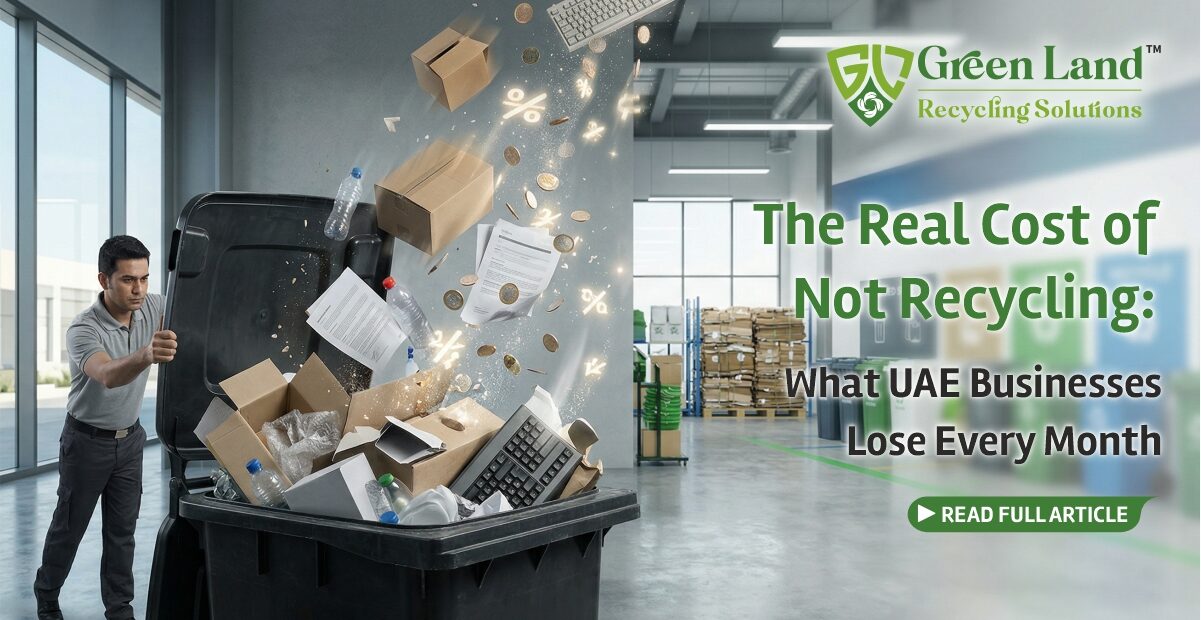
For many UAE businesses, waste management is still treated as a routine operational task — collect, dispose, and move on. But beneath this routine lies a hidden reality: not recycling is costing businesses money every single month.
From unnecessary disposal expenses to lost materials and missed ESG opportunities, the true cost of not recycling is far greater than most organizations realize.
1. Rising Disposal Costs
When waste is not segregated and recycled, it is treated as general waste — the most expensive way to dispose of materials.
Businesses end up paying for:
- Landfill disposal fees
- Transportation costs
- Handling charges
Materials like cardboard, plastics, metals, and packaging that could have been recycled are instead paid for — twice: once to purchase, and again to dispose.
2. Lost Value in Recyclable Materials
Every office, warehouse, or factory generates materials with recoverable value:
- Paper and cardboard
- Plastic packaging and films
- Metals and scrap
- E-waste components
When these are mixed and discarded, businesses lose the opportunity to recover value or reduce costs through recycling. Over time, this becomes a significant financial loss.
3. Higher Operational Inefficiencies
Unmanaged waste leads to cluttered storage areas, overflowing bins, and inefficient workflows.
This results in:
- Reduced usable space
- Slower operations
- Increased housekeeping efforts
- Disorganized waste handling systems
Recycling systems bring structure — and structure improves efficiency.
4. Increased ESG and Compliance Risks
Sustainability reporting is no longer optional. UAE businesses are increasingly expected to demonstrate:
- Responsible waste management
- Recycling rates
- Environmental impact reduction
Without proper recycling, companies face:
- Poor ESG performance
- Limited reporting data
- Higher regulatory risk
In a competitive market, this directly affects brand perception and stakeholder confidence.
5. Environmental Impact That Becomes Business Impact
When waste is sent to landfills:
- Organic waste produces methane
- Plastics contribute to long-term pollution
- Hazardous waste contaminates ecosystems
These environmental impacts are increasingly translating into business consequences — stricter regulations, higher compliance costs, and shifting customer expectations.
6. Missed Opportunity for Cost Optimization
Recycling is not just about sustainability — it’s about smarter resource management.
Businesses that implement structured recycling systems benefit from:
- Reduced disposal costs
- Better waste tracking
- Improved operational control
- Long-term cost savings
Ignoring recycling means missing out on these efficiencies.
How Green Land Recycling Solutions Helps Reduce These Costs
At Green Land Recycling Solutions, we help businesses across the UAE convert waste from a cost centre into a managed resource.
Our services include:
- Waste audits to identify recyclable materials
- Segregation planning
- Certified recycling of plastics, paper, metals, e-waste, textiles, and more
- Compliance-ready documentation and reporting
- Scheduled collection and waste management support
We help organizations reduce waste costs while improving sustainability performance.
The Bottom Line
The cost of not recycling is not always visible — but it is constant.
It shows up in monthly expenses, lost resources, inefficiencies, and missed opportunities.
Businesses that rethink waste management today will not only reduce costs but also position themselves for a more sustainable and competitive future. With Green Land Recycling Solutions, waste is no longer something to pay for — it becomes something to manage, recover, and transform.