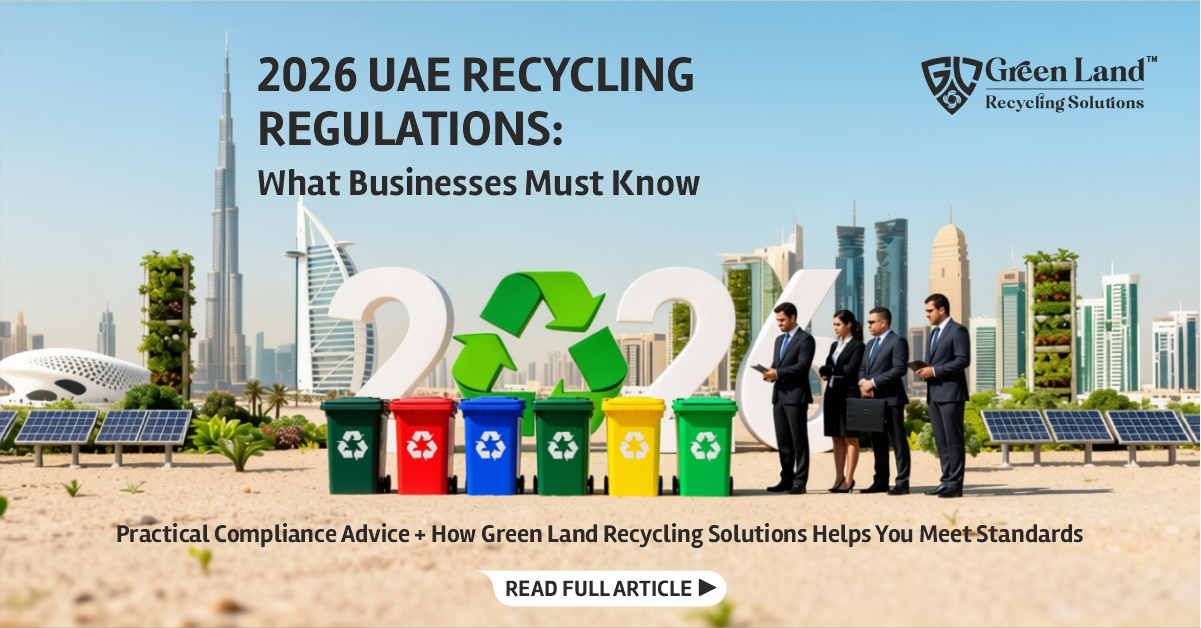
As the United Arab Emirates moves steadily toward a more sustainable future, new recycling regulations set for 2026 are poised to reshape how businesses handle waste across sectors. With the UAE banning several categories of single-use plastics and tightening waste management rules, compliance is no longer optional — it’s a strategic imperative.
For companies operating in the UAE, understanding the evolving regulatory landscape and adapting operations now will reduce risk, support ESG goals, and position organizations as sustainability leaders.
What the 2026 Regulations Include
1. Single-Use Plastic Ban
From January 1, 2026, the UAE will prohibit the import, production, and sale of many single-use plastic items, including cups, cutlery, plates, containers, and certain packaging materials. This builds on the phased plastic bans already implemented (such as bags, stirrers, and foam containers).
What it means for business:
Companies across retail, hospitality, F&B, and manufacturing must review packaging and operational materials now to avoid disruption.
2. Landfill Reduction Targets
The UAE’s waste management strategies — particularly Dubai’s Zero Waste by 2041 roadmap — emphasize diverting waste from landfill through recycling, recovery, and reuse. This includes mandatory waste segregation and reporting for certain waste streams.
What it means for business:
Segregation at source, accurate waste documentation, and evidence of recycling (not disposal) will become compliance fundamentals.
Practical Compliance Advice for Businesses
Audit Your Waste Streams
Start by understanding what your business generates:
- Plastics (rigid & soft)
- Packaging (cartons, wraps)
- Food/Organic waste
- E-waste and batteries
- Textiles and uniforms
- Expired or damaged stock
A waste audit helps identify recycling opportunities and reduces the risk of misclassification or improper handling.
Segment at Source
Segregation makes recycling effective. Set up dedicated streams for recyclable and non-recyclable items — and train staff to sort correctly. Contamination is one of the biggest barriers to successful recycling.
Document Everything
Regulations will increasingly require traceable records:
- Collection tickets
- Recycling certificates
- Weight and volume reports
- Disposal records for regulated waste
These not only prove compliance but also support ESG reporting.
How Greenland Recycling Solutions Helps You Meet 2026 Standards
At Greenland Recycling Solutions, we help UAE businesses seamlessly comply with current and future recycling regulations through:
Certified Waste Handling
We are Dubai Municipality–approved and aligned with national compliance standards for recycling, disposal, and material recovery.
Comprehensive Service Coverage
Whether it’s plastics, e-waste, organic waste, textiles, batteries, or specialized waste, we provide tailored recycling streams and safe processing.
Documentation & Reporting
You receive traceable records, certificates, and reporting data — ready for audits, regulatory reviews, and ESG disclosures.
Operational Support
From waste audits and segregation guidance to logistics and processing, we provide end-to-end support so your business stays compliant without operational disruption.
Final Thought
The 2026 recycling regulations signal a new era of responsibility and opportunity for UAE businesses. Embracing compliance early isn’t just about risk avoidance — it’s about aligning your operations with sustainability goals, optimizing resources, and building brand value.
Green Land Recycling Solutions is here to help you navigate this transition — with practical solutions, certified processes, and the expertise to turn regulatory requirements into sustainable advantage.